


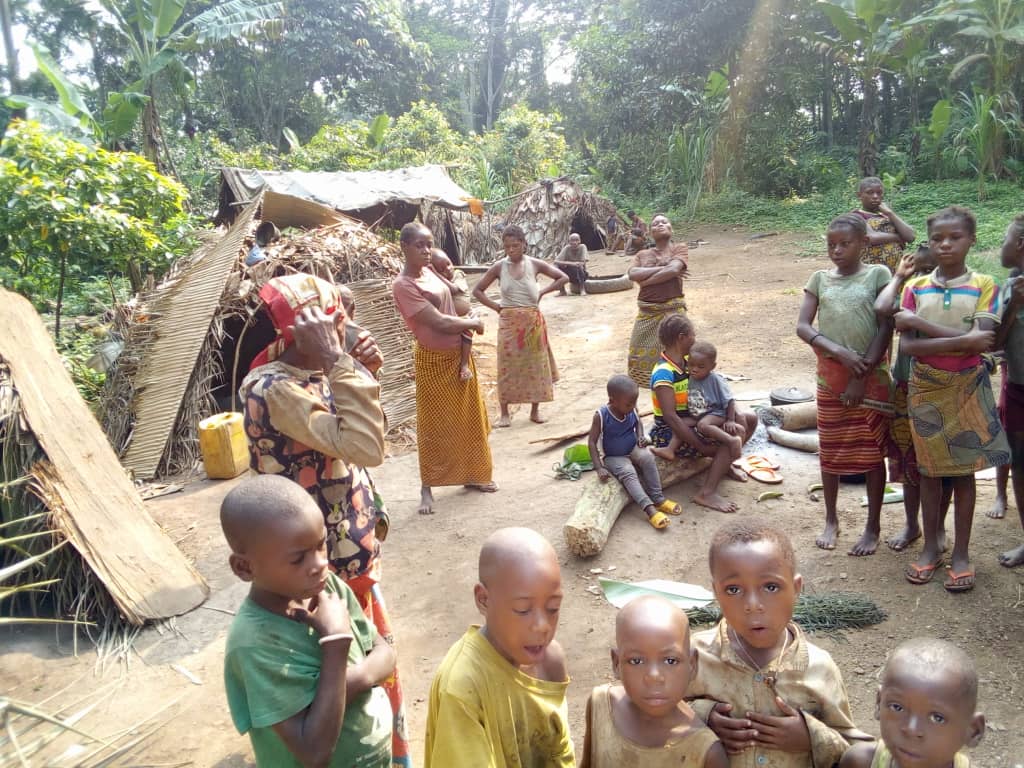
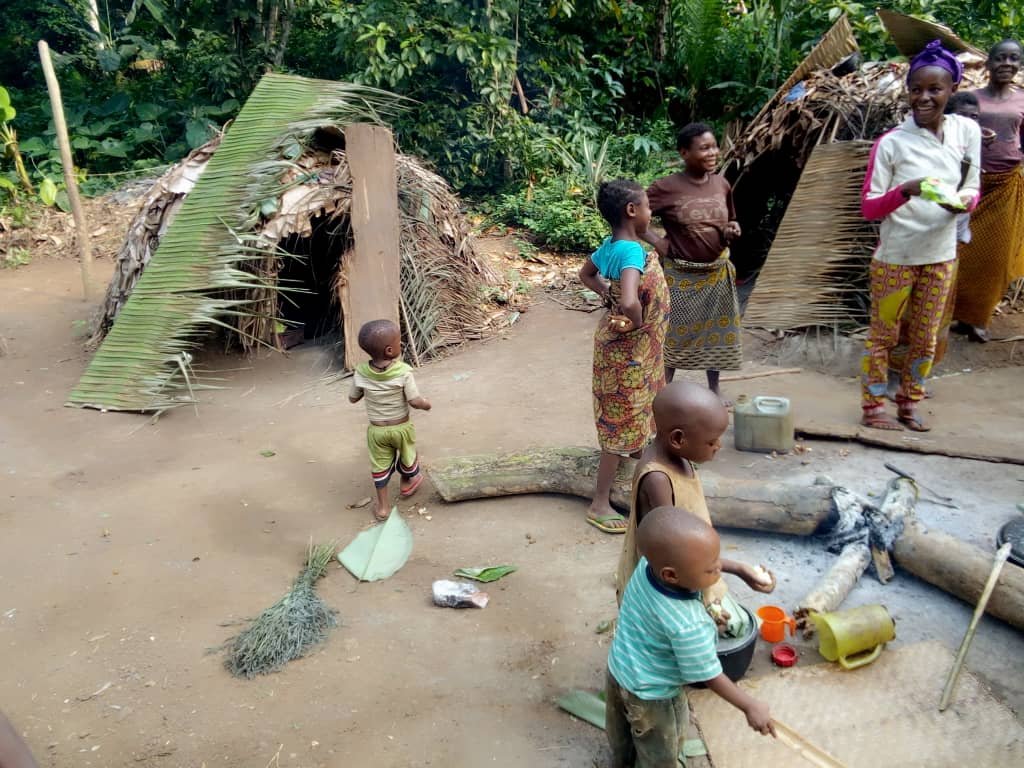
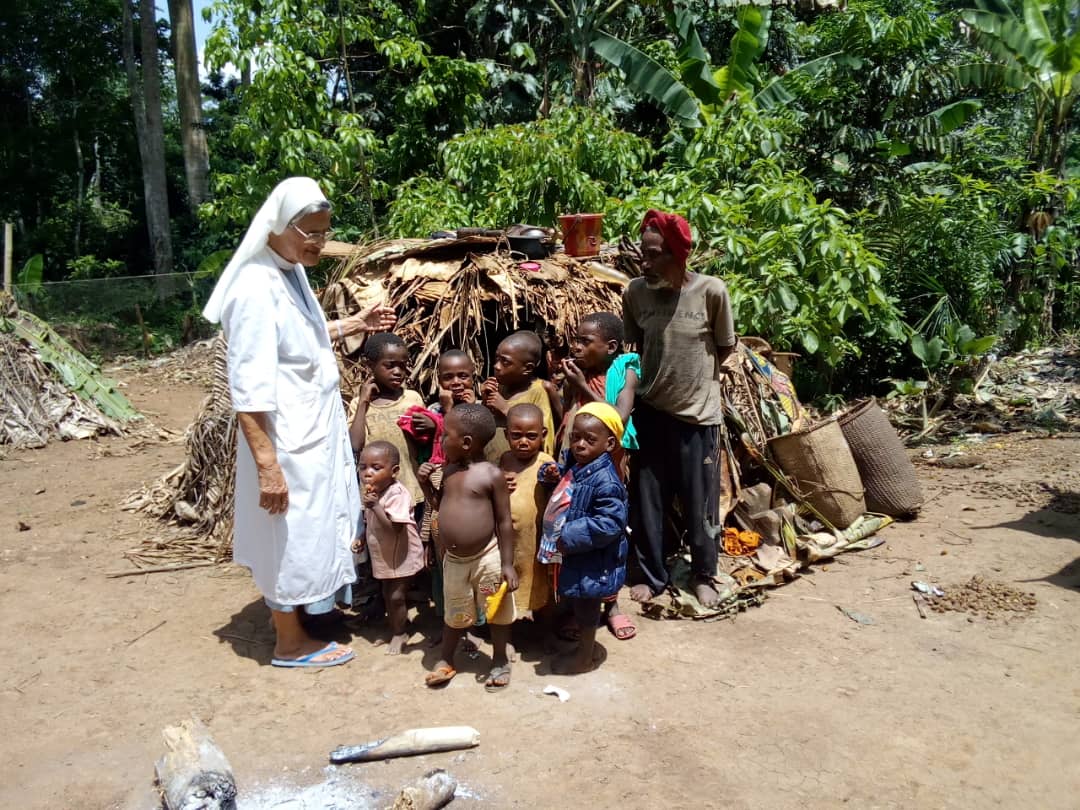
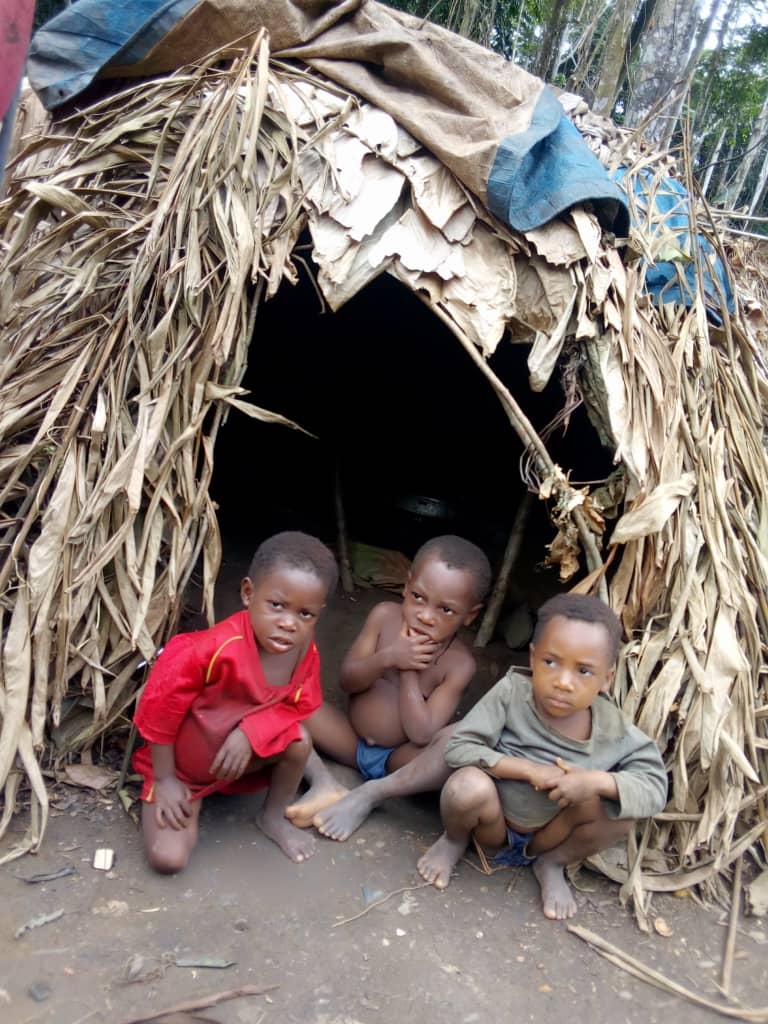
Pygmies are an ethnic group generally known to live in the equatorial rainforest of Africa. They have a strong sense of community life, characterized by a lifestyle according to nature, unique. Their natural environment provides everything they need for their livelihood. Generally they are easily identifiable by their unique physiognomy and low stature characteristics that differentiate them from many other tribes or clans. They speak a common language known as "Bakar".
Academic education is not part of their tradition: given the structures at their disposal and the great distances. For these reasons many of them do not attend school, rather they have an informal and oral education. They have a natural symphonic and melodious way of singing, they use their voices excellently. Most of their songs speak of their traditions and history.
The Pygmies are surrounded by the "Banti", (a name that refers to the people living in Central, Eastern and Southern Africa) with whom they are more often forced to confront in many areas and in many aspects. The challenge of integration and mutual respect for cultures still leaves much to be desired. The real and lasting solution remains that of education.
Every culture needs to be educated and evangelized so that the more human and dignified coexistence can characterize the relationship between the pygmies and the "banti". However, much has already been done in this field and much remains to be done, as the challenges are still open. In the SANGHA region, precisely in Sembe, we have both groups living in the community, although with many challenges yet to be faced.
That is why pastorally, the local Church carries out initiatives that can help create an awareness of God’s love for humanity and for every human being, regardless of origin, race or nation. It is in this light of encouragement to bring the love of God to humanity that the Diocese of OUESSO organized a musical concert between the pygmies of the different localities, which were to converge at PEKE, around their Bishop, priests and religious and to all the population to sing praises to Almighty God who is the father of all.
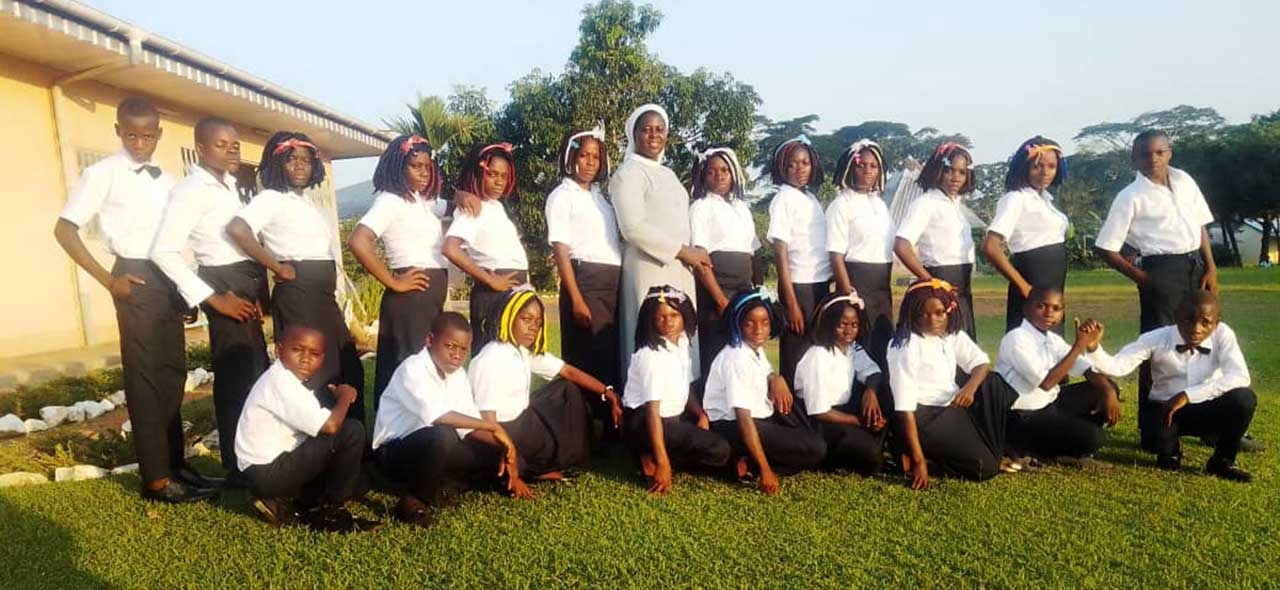
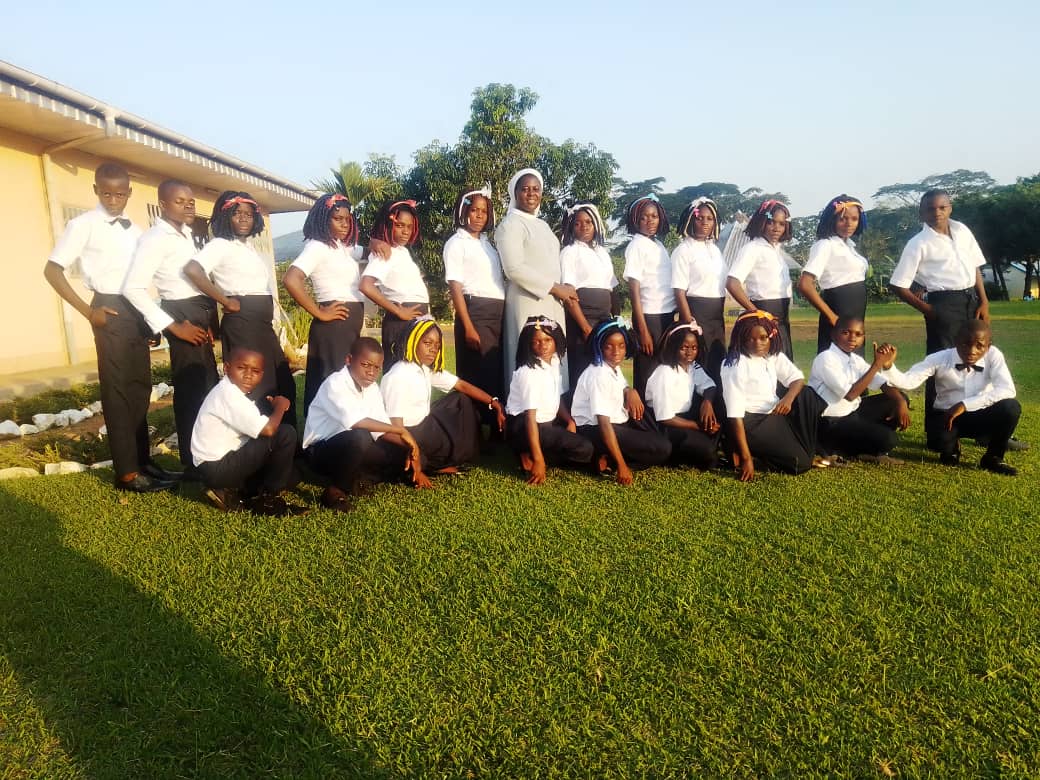
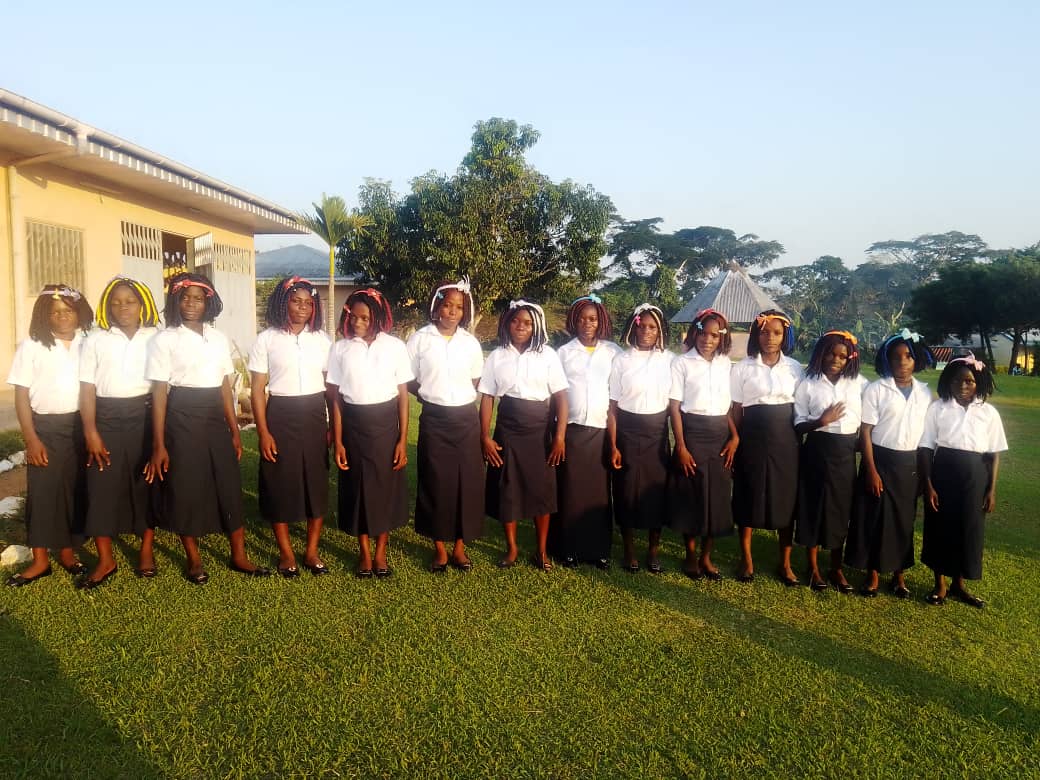
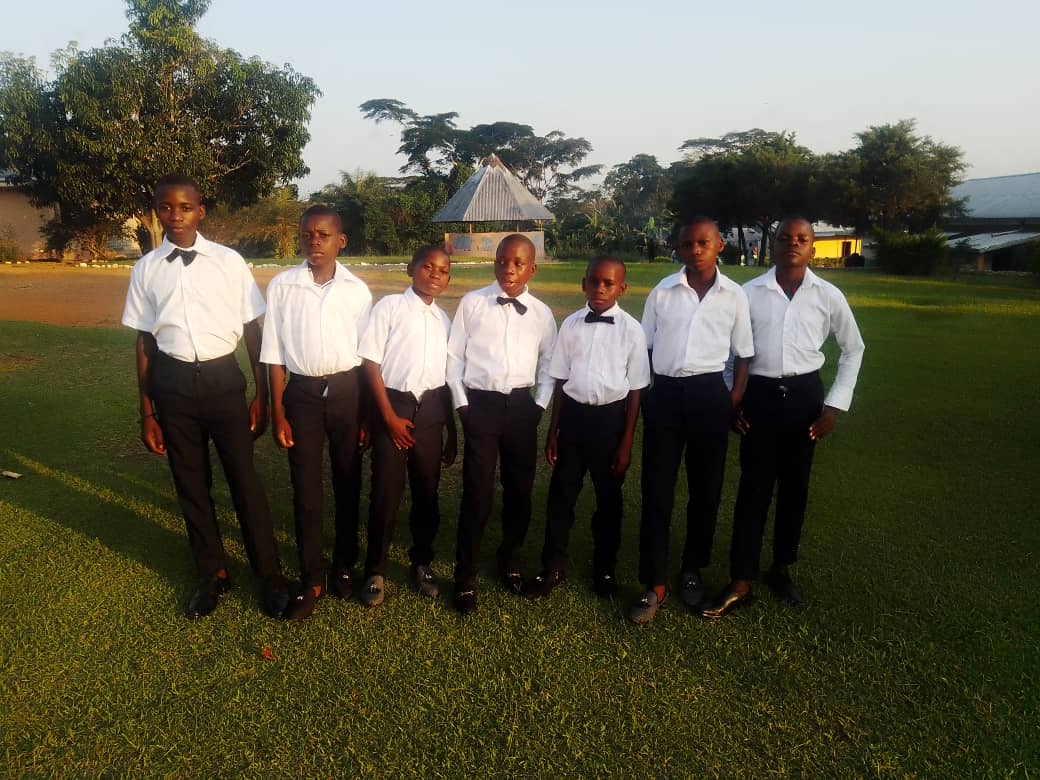
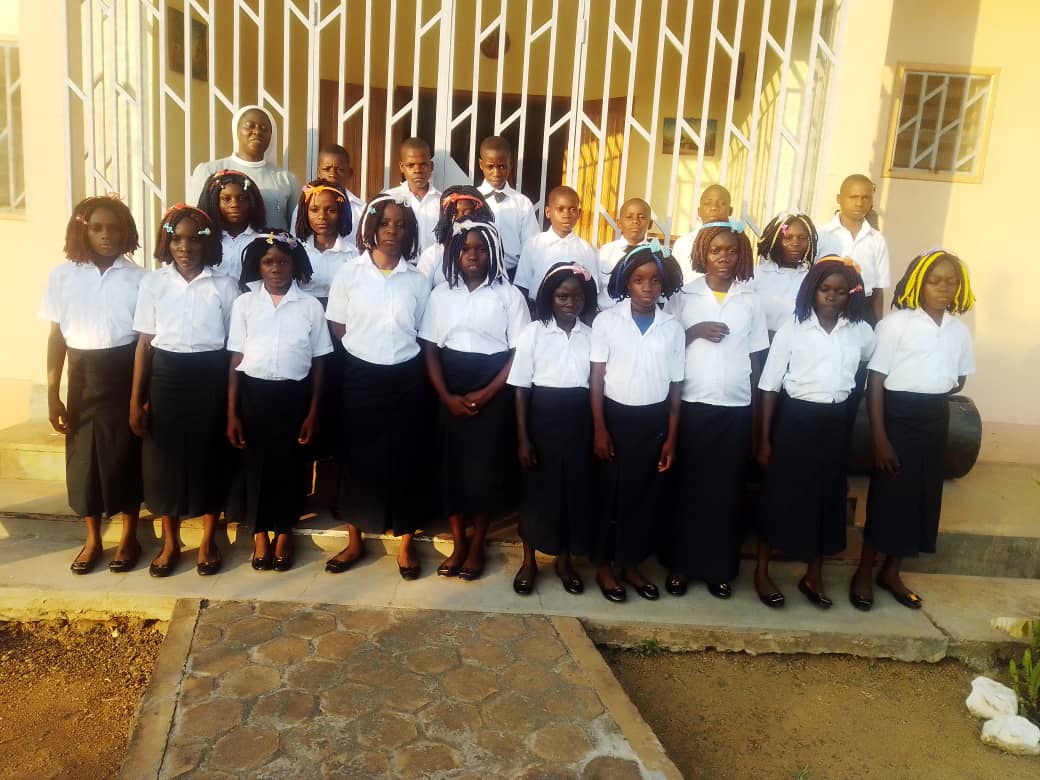
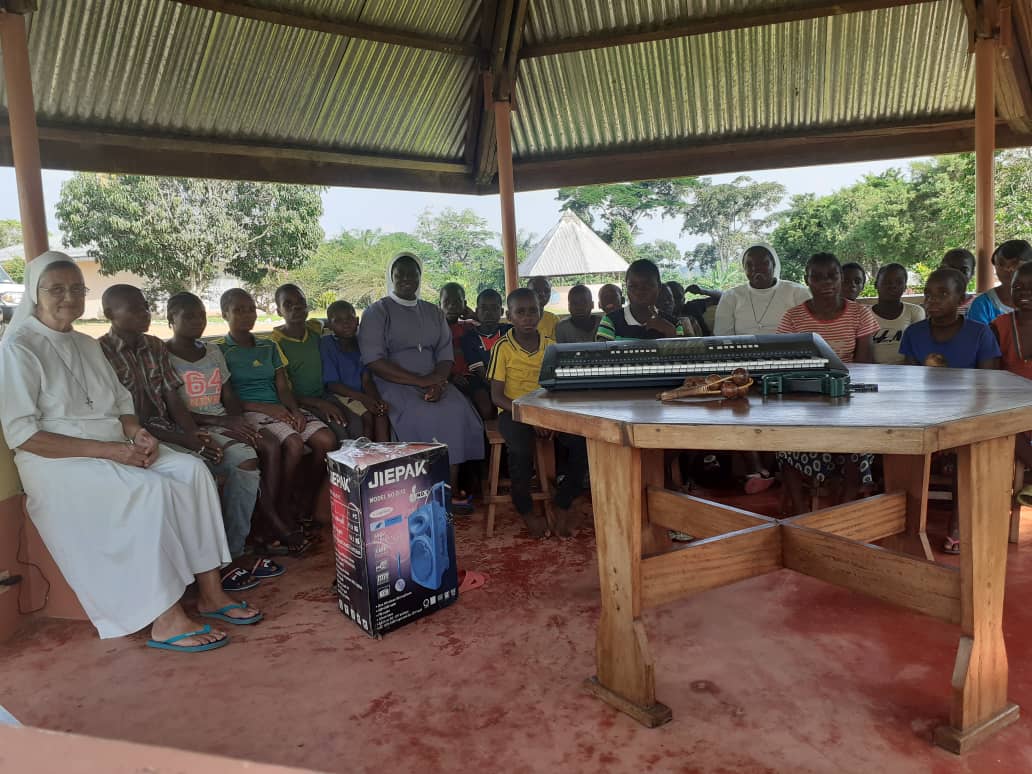
Once we received the invitation of the Bishop, we Franciscan Missionary Sisters of the Sacred Heart who have been in Sembe since 1995, we immediately invited the children of our School, San Kizito of LIPOUA and those of the neighbourhood. We rounded up 21 girls and boys and immediately started the song rehearsal. All the members of our religious community, in the different labour camps, participated and encouraged. The children were often escorted to their homes by car to reassure the parents that their children were actually with us. Very often Anita PUNCINI, a volunteer from Switzerland who has been living with us for many years, did this service.
After three weeks of rehearsing songs in which we enjoyed the wonderful voices and joyful expressions of girls and boys we felt so good and grateful to God that he used us as tools to convey his love and joy to his children, the pygmies. It’s time to leave for PEKE, we will accompany: Mme Esther nurse of our hospital, Mme Nadia and Mr Jean Ndamo both teachers of our schools in EGNABI and LIPOUA, members of the parish choir and Dr. Buka, doctor in our hospital. Certainly the sisters could not miss: Sister Lucia Superior of the Community, sour Ritapia Director of the Hospital and Sister Blessing Head of our schools.
The new choir was named after: CORO SAN KISITO di LIPOUA - SEMBE. The choice of the name is due to the fact that the saint is a young African from Uganda who died because of his faith in God and that today he is a model of faith for young Africans.
On Saturday, November 13, 2021, we left for PEKE in two minibuses. We felt that the emotion filled every person with joy. We arrived at PEKE at noon. Being the first exit and the first time that the boys reached the city of Ouesso, the capital of their region SANGHA, we decided to take a few city tours to get to know some important places. They were so moved that some of them did not stop thanking the nuns for everything they do for them.
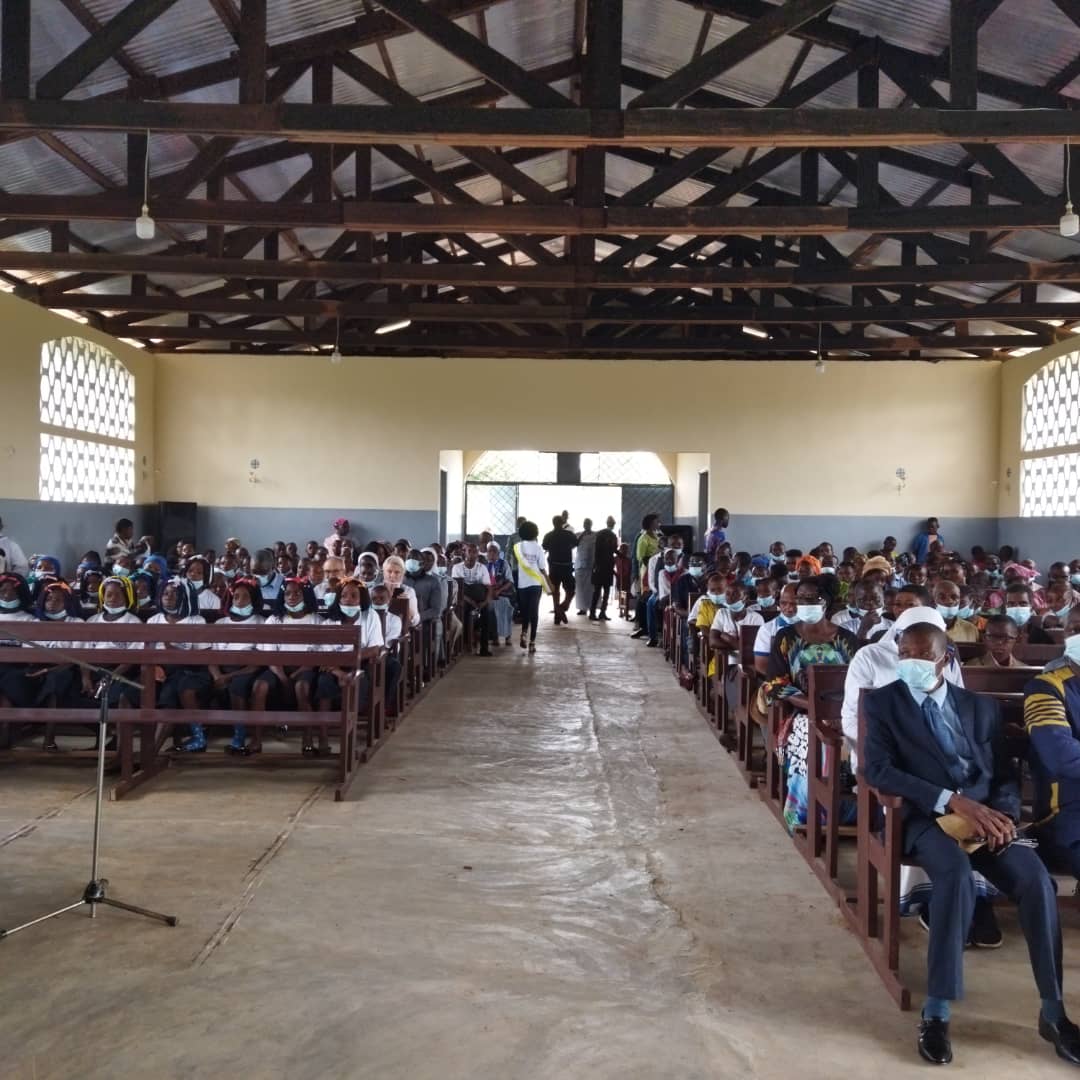
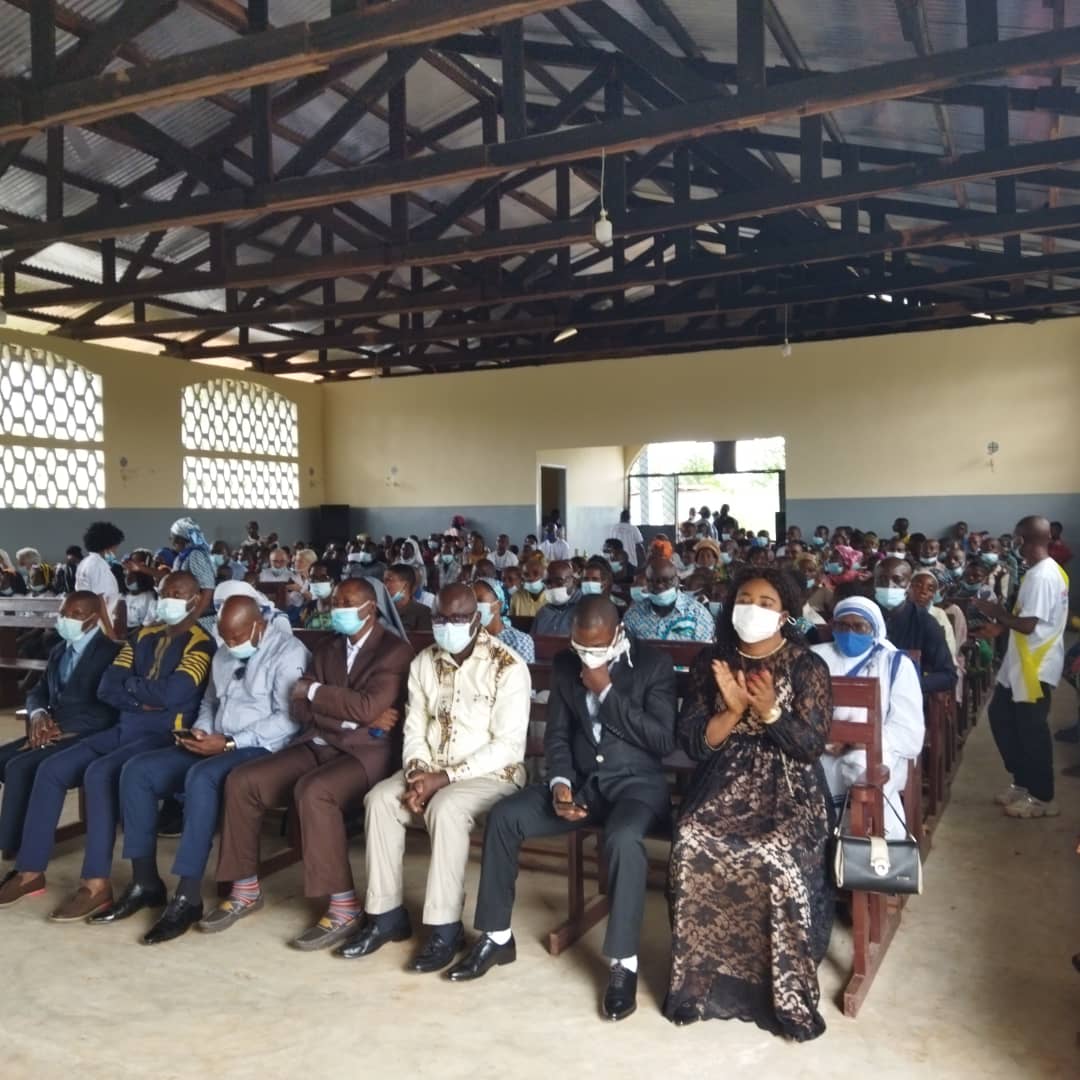
The musical concert began at 19.00, attended six choirs from various pastoral areas of the PEKE and other parishes such as: Peke, Palmeraires, village of Paris, Zoulabouth, Biessi, Lipoua da Sembe. The choirs made their presentation in the presence of the Bishop of the diocese of Ouesso, Mons. Yves MONOT, the Bishop of the diocese of Imfondo Mons. Daniel NZIKA, of the Priests and Religious of various congregations and of all the faithful.
Our profound joy is based not only on the fact that our boys sang better than anyone, but on the expression of joy and freedom that we were able to grasp in the faces of all the Pygmies gathered for the concert. Certainly through this experience they have been able to experience God’s love for every man and even strengthen their belonging to the society in which we want to live as children of God. The next day, we participated in the Eucharistic celebration in the new Church of PEKE and then we undertook the return to Sembe.
This experience was unique and will remain as an unforgettable moment for us sisters because God has allowed us to share with all the other Pygmies of the Region the certainty of being brothers in Jesus. We thank the Almighty for his boundless love. The Gospel mandate resounds every day in our hearts: "Go, therefore, and make disciples of all nations..." (Mt. 28:19a).
Sister Blessing Lukong
“May our good Lord Jesus
make the Heart of each of His Missionaries
radiate the charity of His Heart” (F3, pp.160)
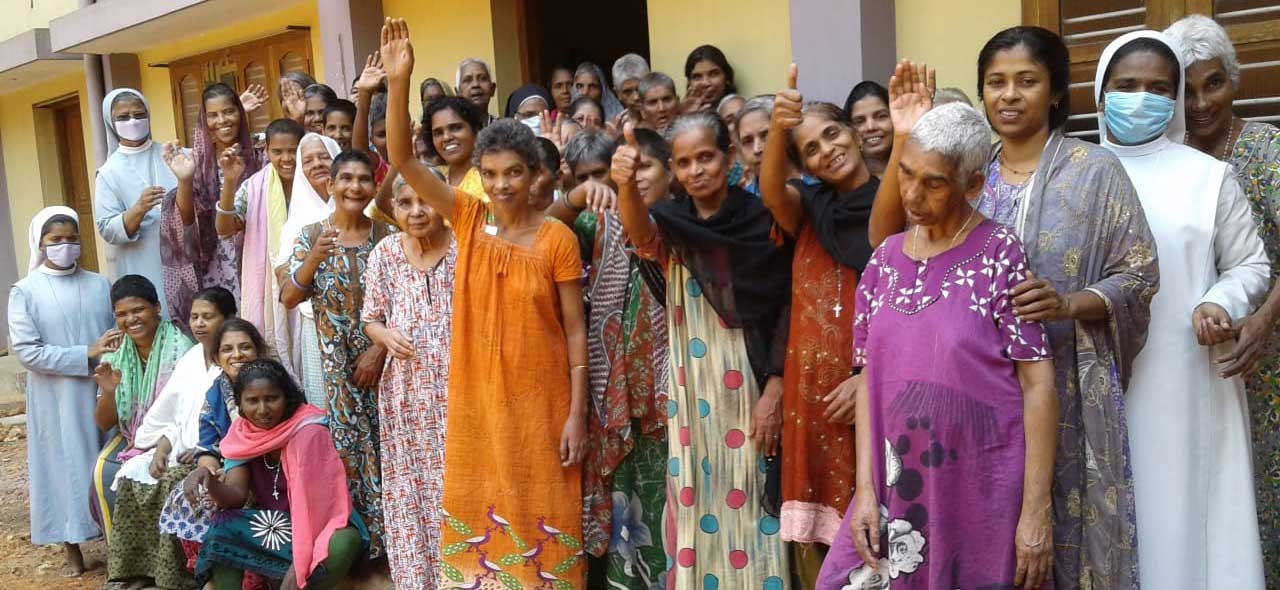
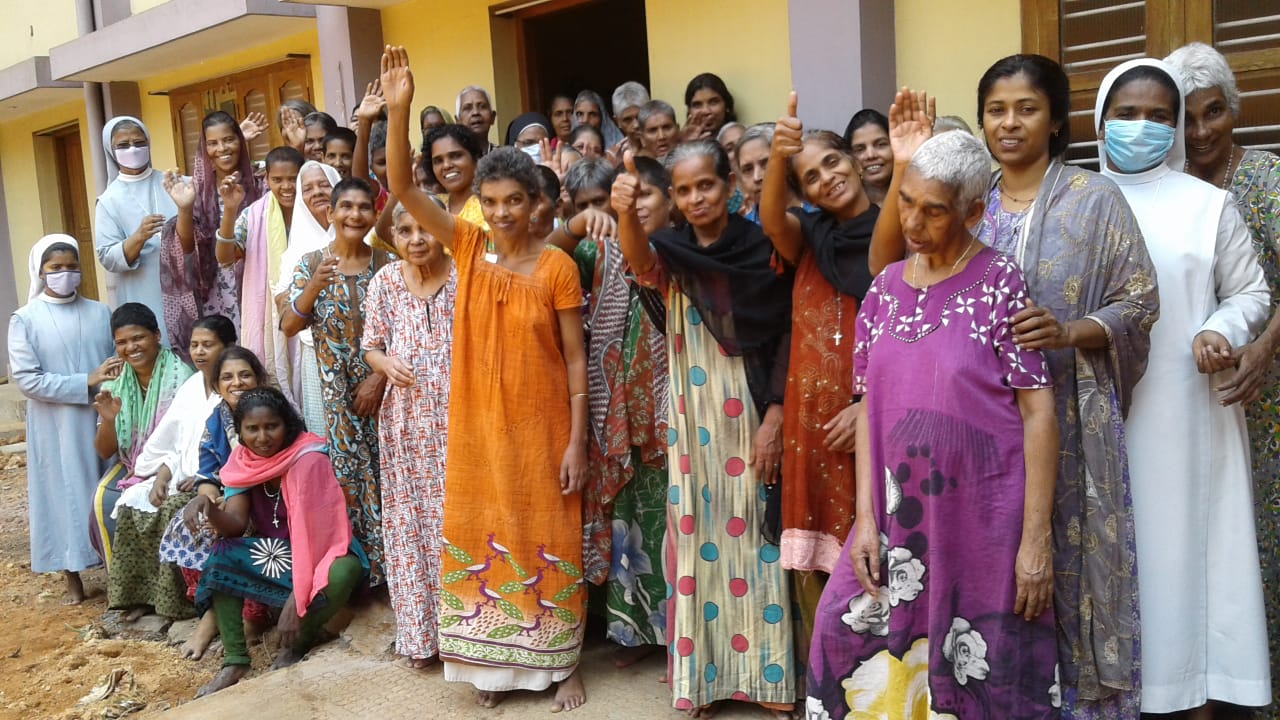
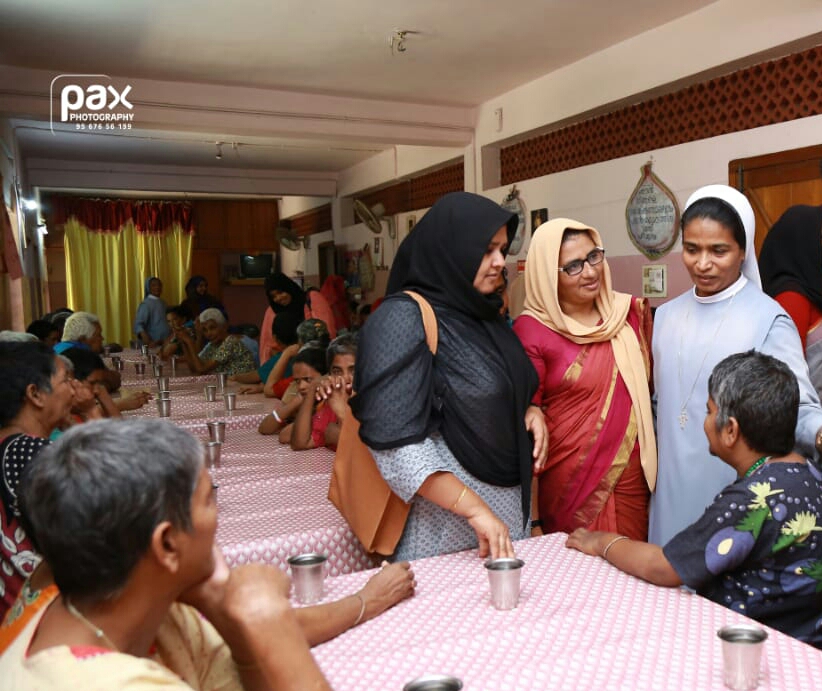
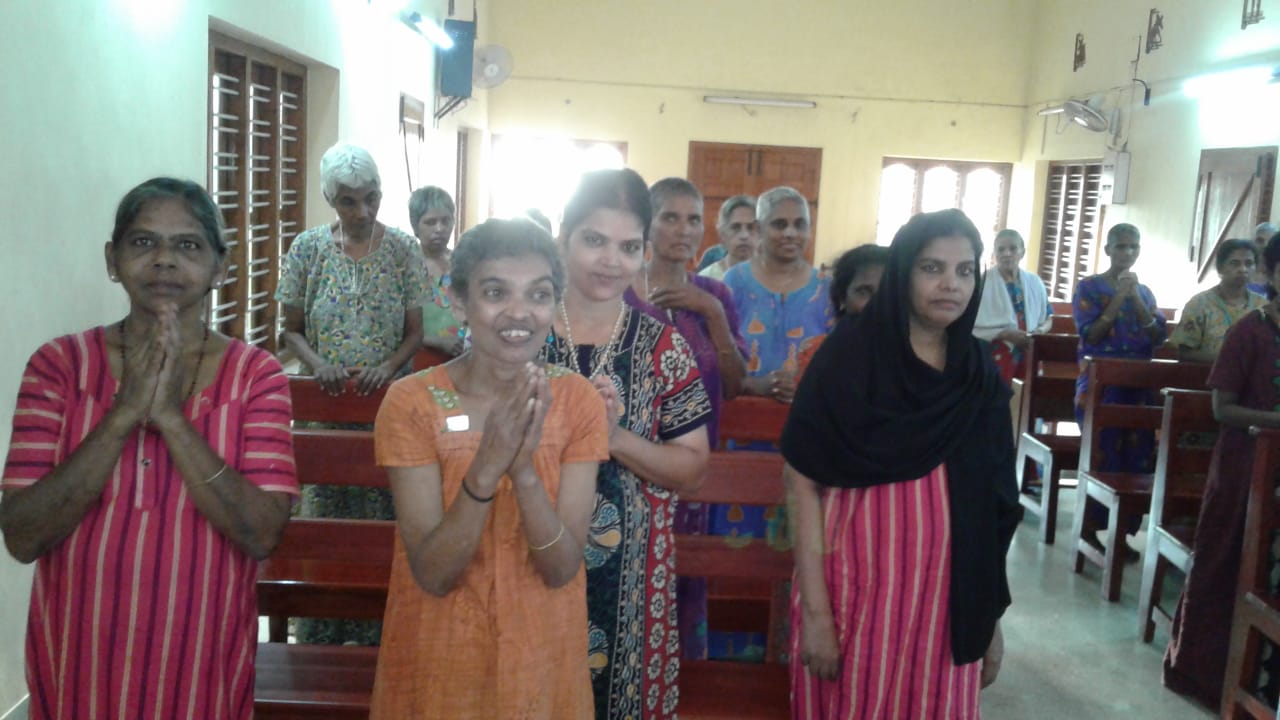
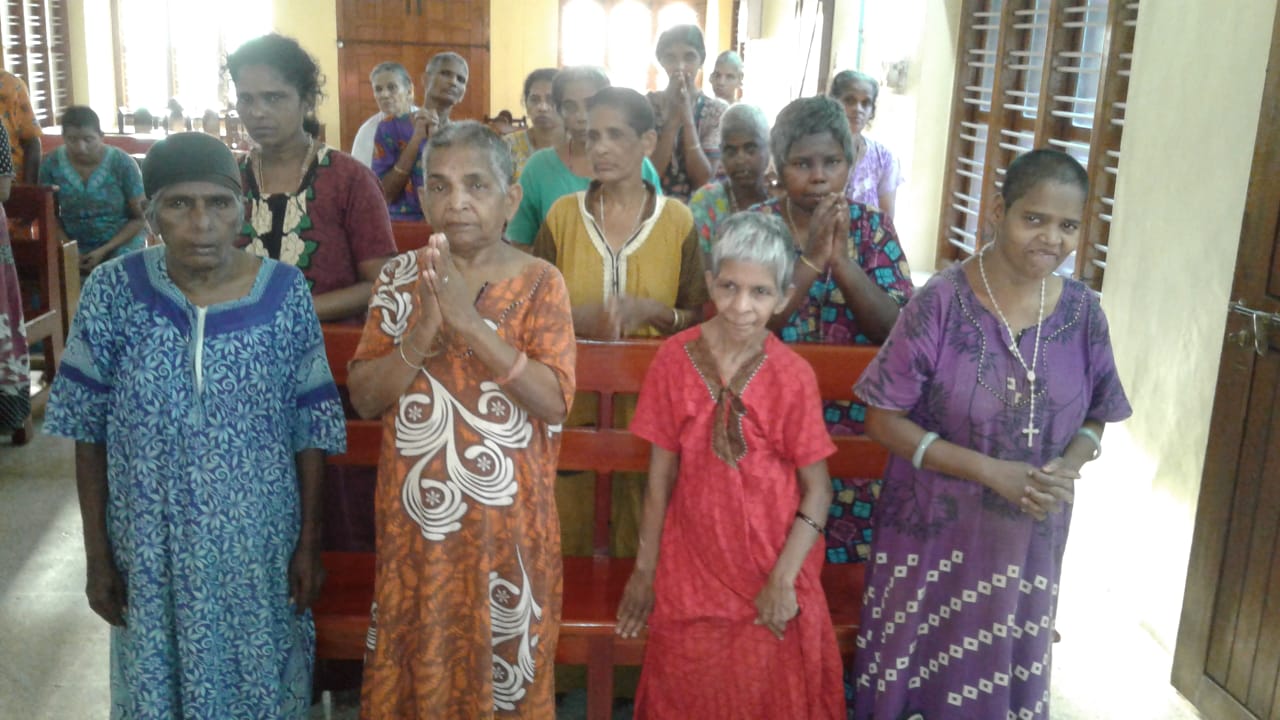
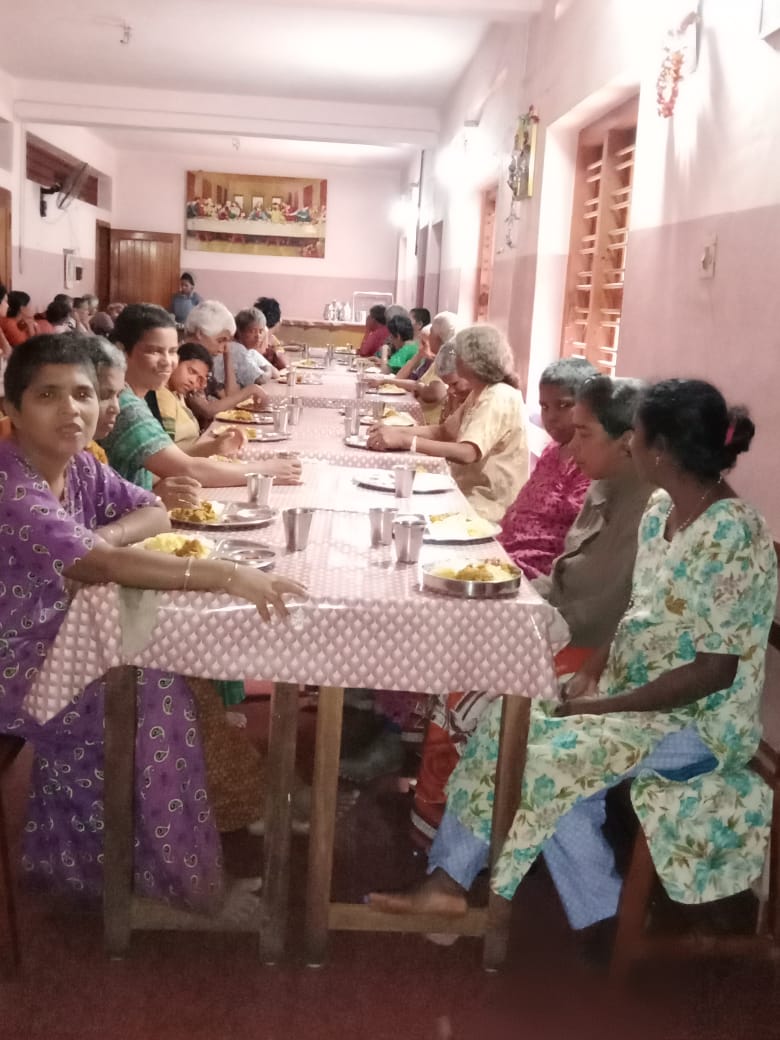
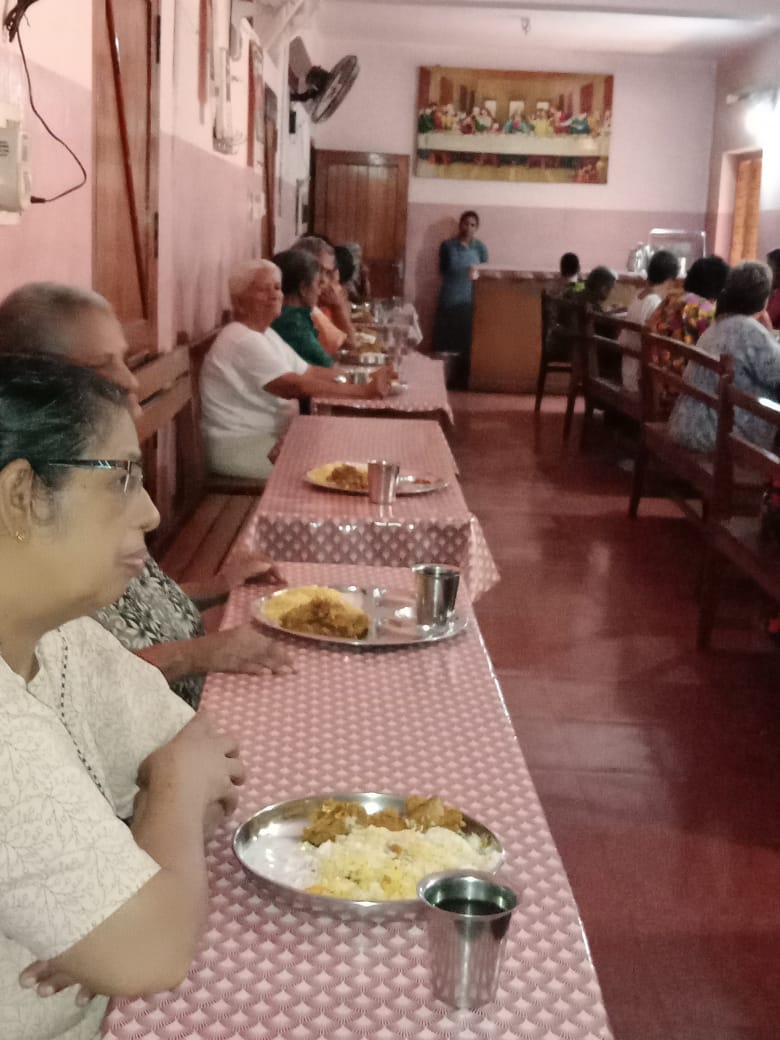
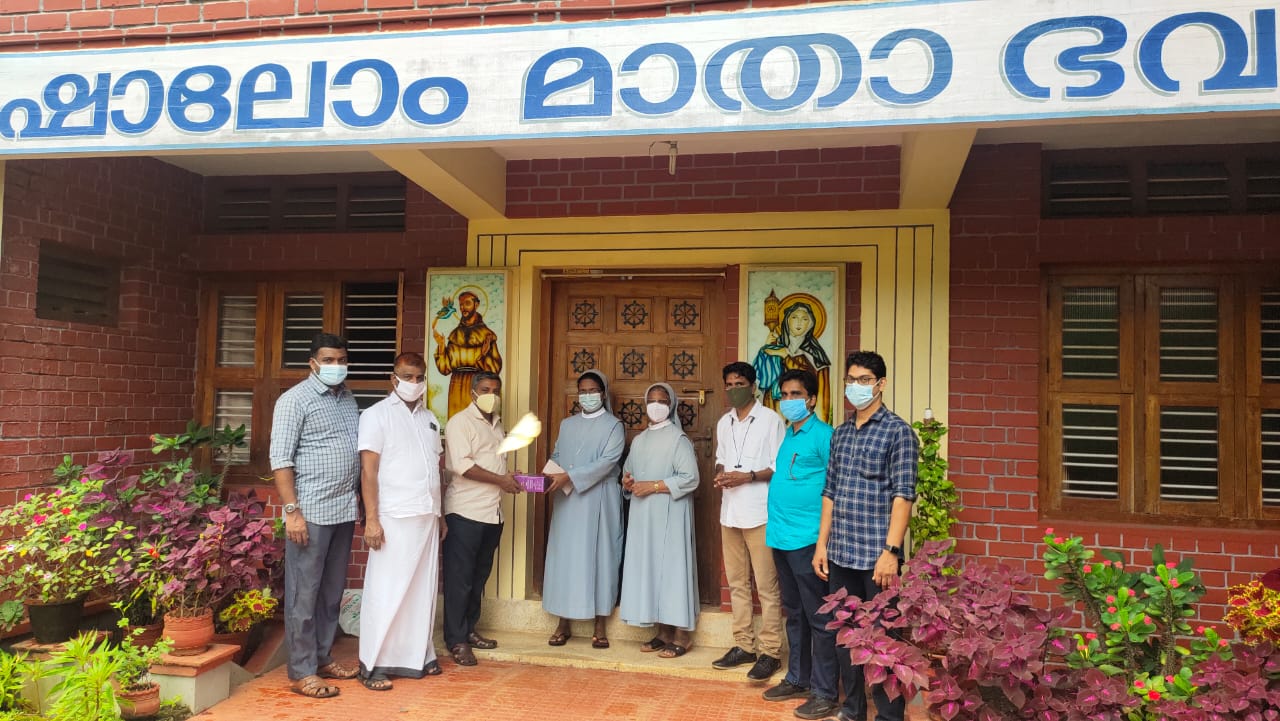
Shalom Matha Bhavan, is one of our reception centers belonging to the Franciscan Missionary Sisters of the Sacred Heart, based in Manjeri Kerala. Faithful to our origins and our FMSC identity, we serve "sisters of special needs" with joy and predilection. There are about sixty women we care for. These women have found in us a family that loves them, accepts them and provides them with sustenance thanks to the contribution of the generous hearts.
The fraternal service that we carry out with women in Manjeri goes beyond the "Universal Declaration of Human Rights" to safeguard the dignity of the person and his integrity, because we FMSC, following the example of Francis of Assisi, find in the poor the suffering face of Jesus. Faithful to our Franciscan-missionary spirit we love and serve the Lord in the poor, we restore to them the dignity of children created in the image and likeness of God. In fact, the Lord entrusted them to us and we, with the sentiments of the Heart of Christ, offer them small gestures of tenderness and love on the part of the Heavenly Father.
So that the charity of the Heart of Jesus may shine forth, we opened this mission in Manjeri in 2010, in order to respond to the needs of women who suffer from domestic violence also because of the unpacked dowry and other forms of mistreatment and abandonment. Most of these women are victims of sexual abuse, cancer, bipolar disorder, schizophrenia, depression and domestic abuse... They’re really vulnerable women.
Abandoned and immersed in absolute solitude, they took refuge in bus and train stations, they found their food in garbage cans. These "sisters" were brought to our house by the local police, social workers and, at times, even by their own family members. They are originally from Manjeri and other surrounding areas: Calicut being an important railway station, gathers many of these people, who in a certain way find a refuge in the station, most of them are people from north of India looking for work or a better life. But they often fall into the web of human trafficking and are exploited.
All the people who come to Shalom Matha find a welcoming and loving home and those who take care of their suffering with medicine, advice, sincere love in the Franciscan style, without prejudice to culture, skin color or religion. The important thing is to bring them back to normal life.
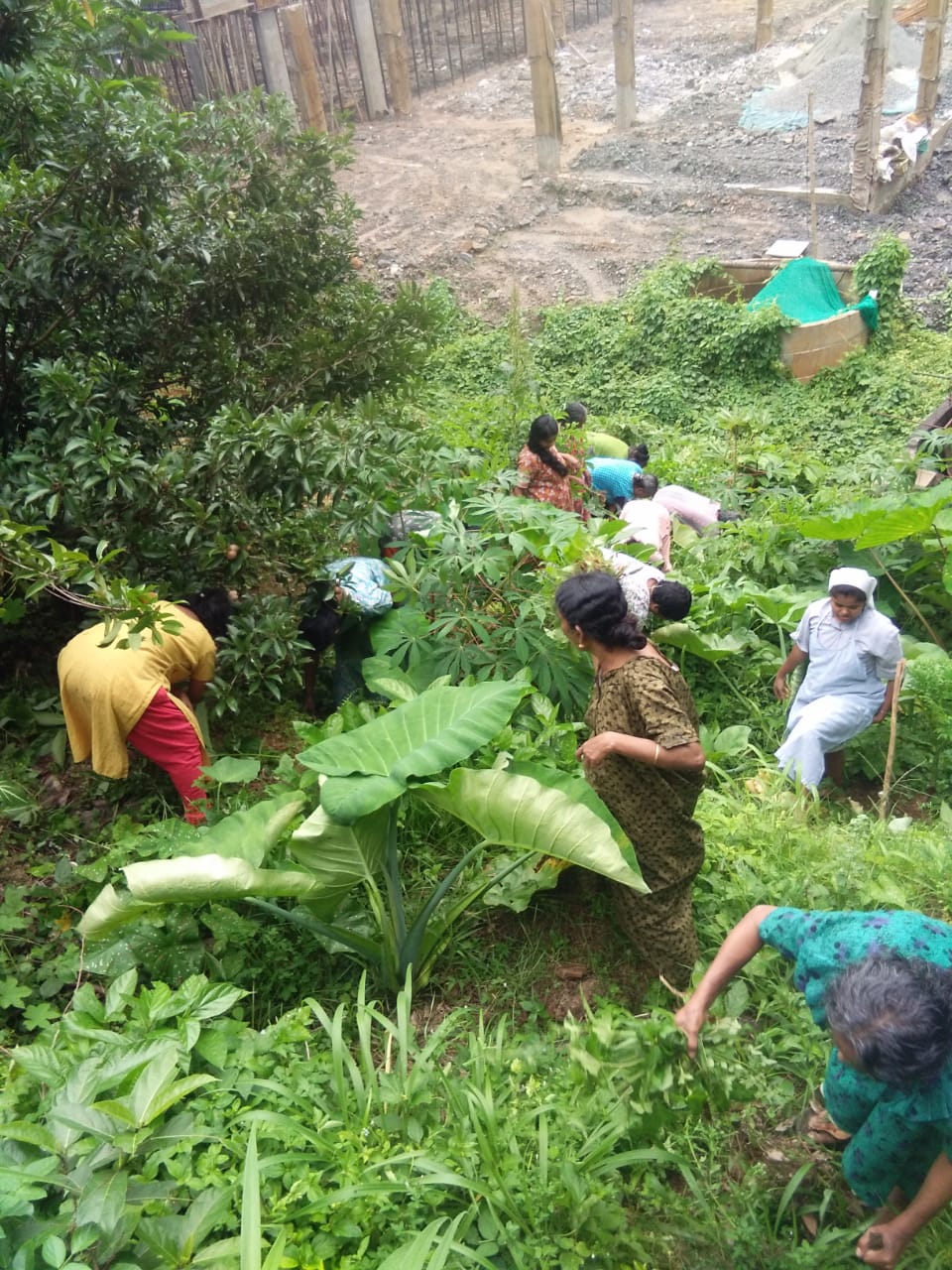
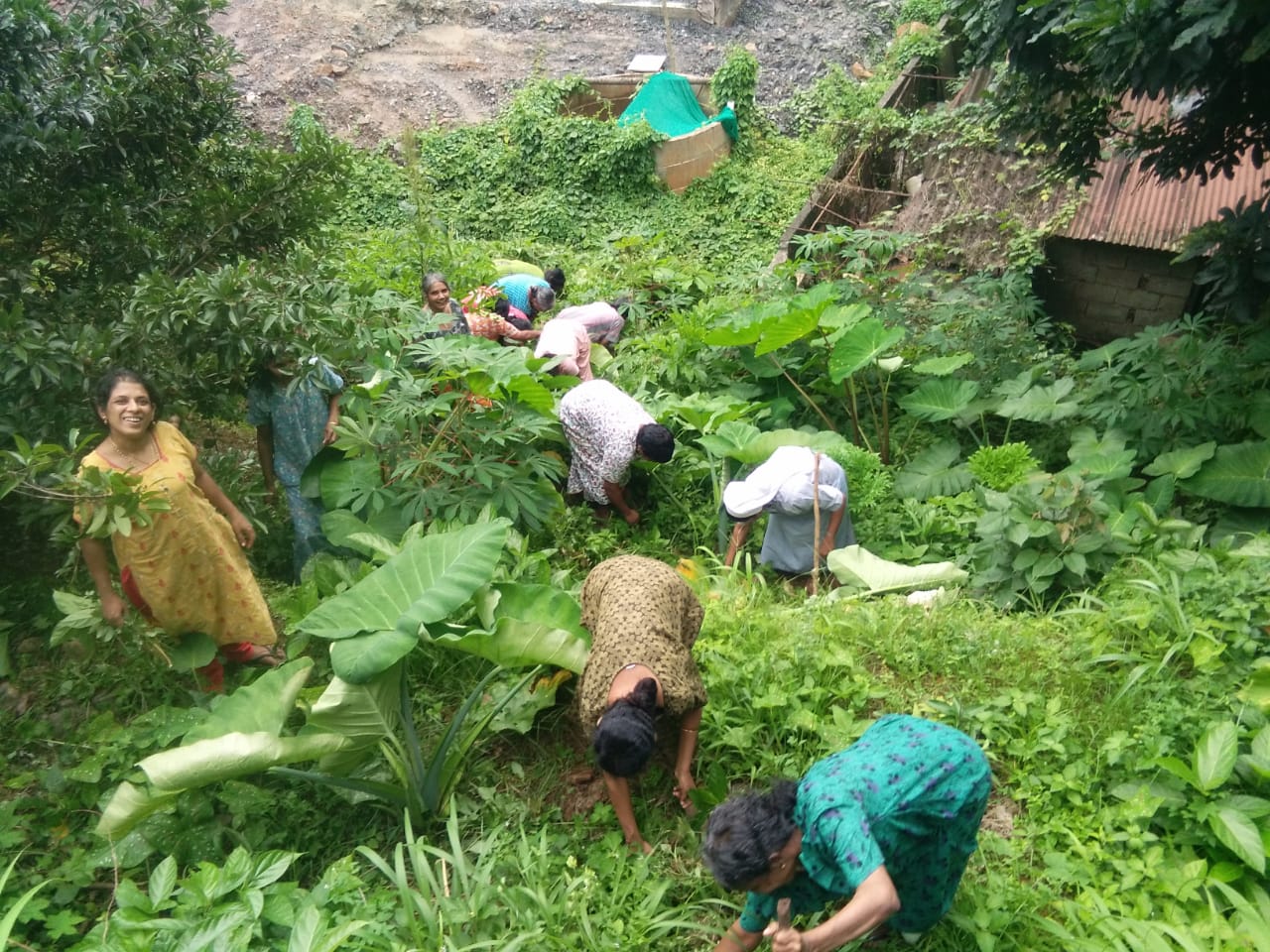
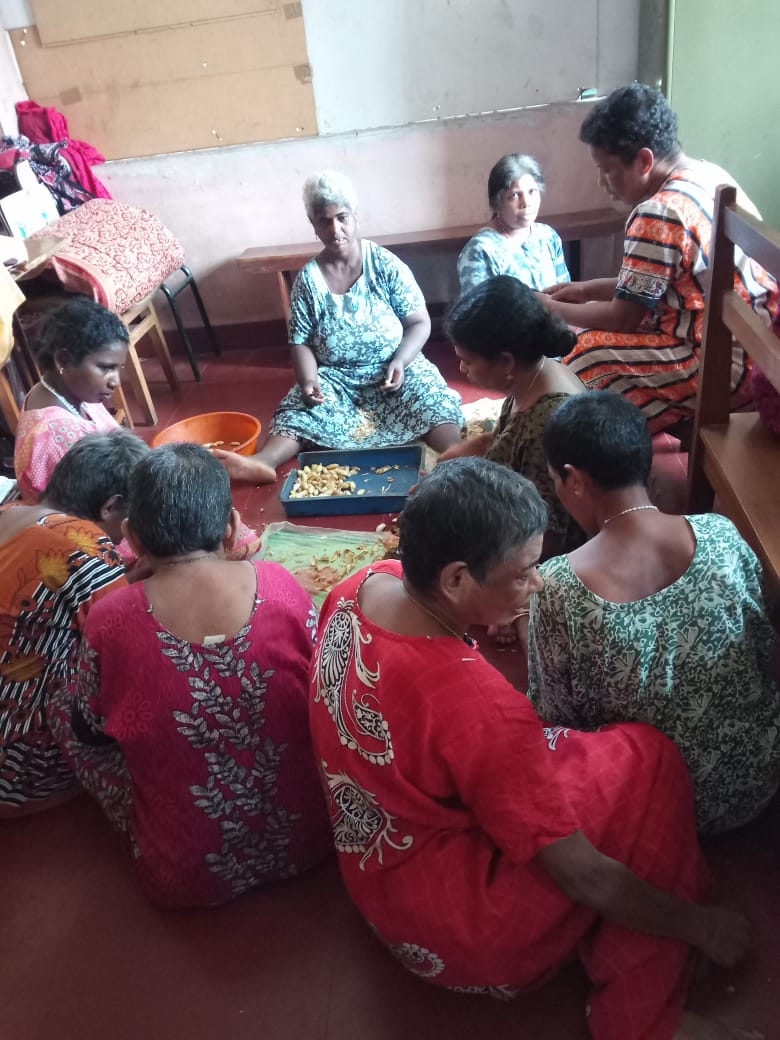
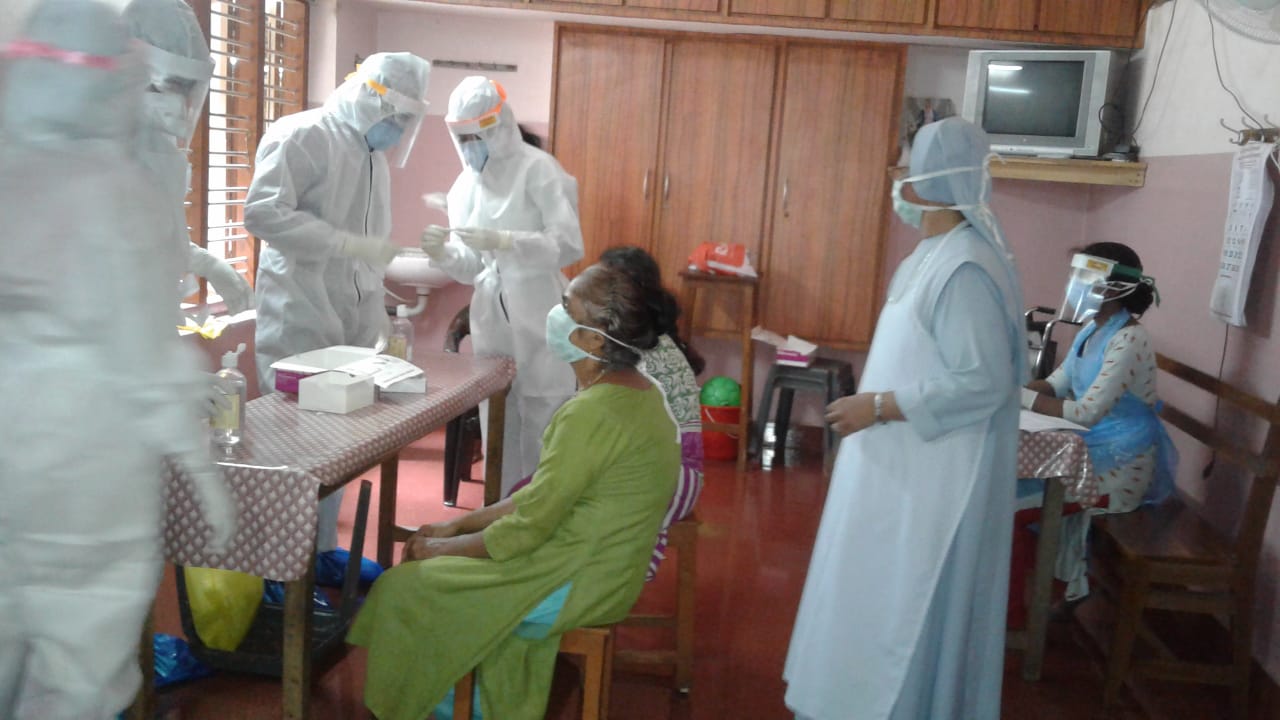
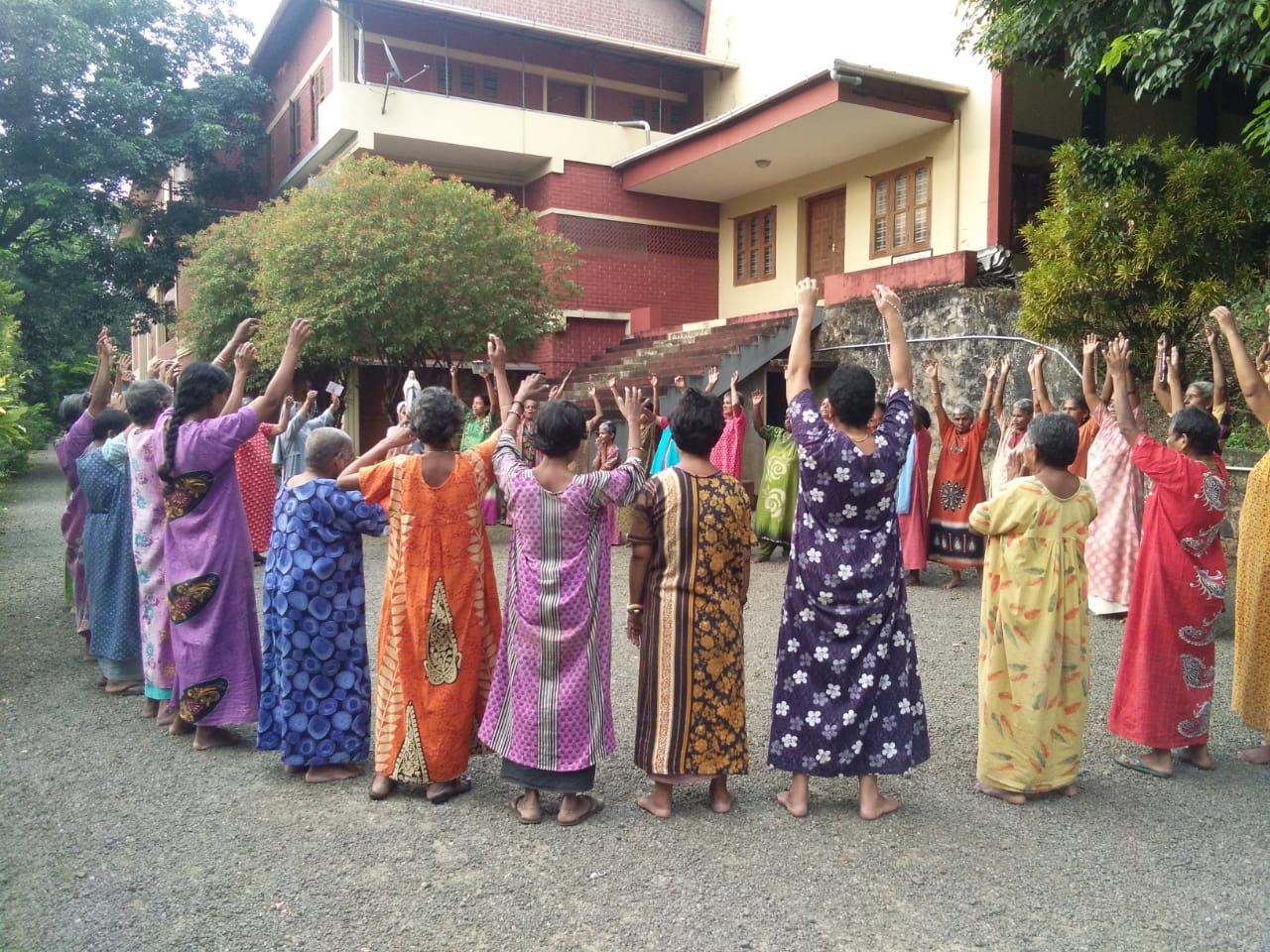
Women spend their time growing vegetables, flowers, helping in the kitchen, washing dishes and helping other friends more in need of them; praying, singing, dancing or realizing cultural programs to entertain themselves and others. The sisters spend their time sharing every hour of the day and night. Four of the five sisters are specialized nurses, a doctor, from the nearest hospital, visits them once a week.
Divine Providence always accompanies us in all our needs and we are very grateful to the fatherly and loving care of the Heavenly Father who inspires generous hearts to sustain us in different ways: food, clothing, medicine, etc. Let us make the words of our founder, Venerable Fr. Gregory Fioravanti, and we praise God because "Marvellous are the ways of the Lord!"
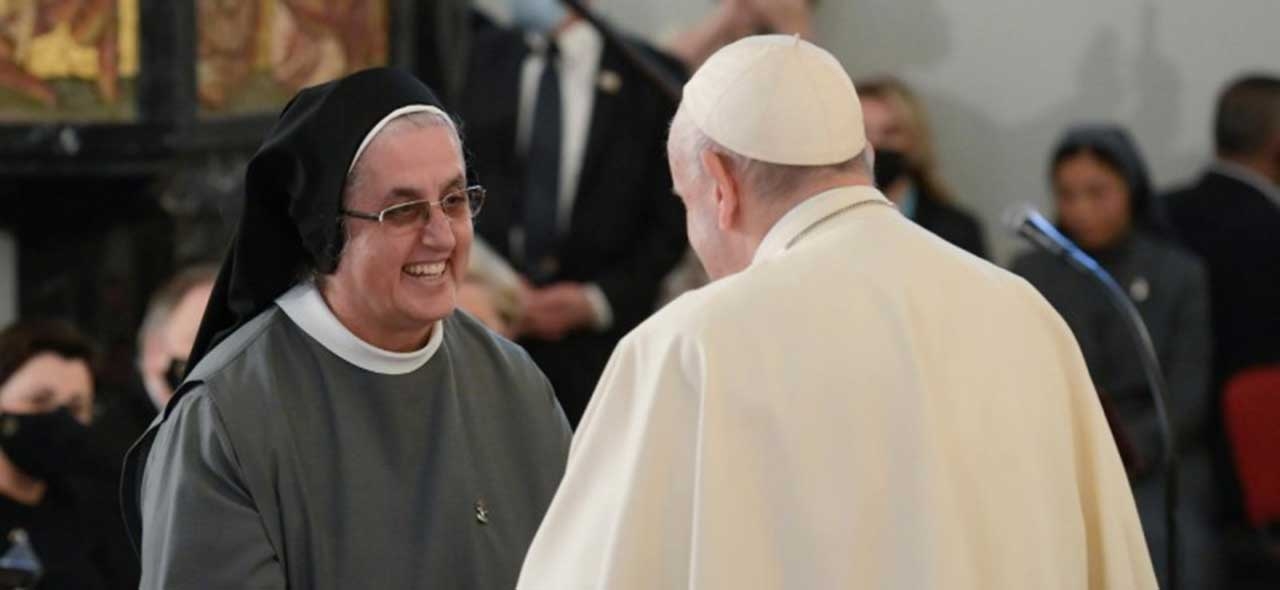
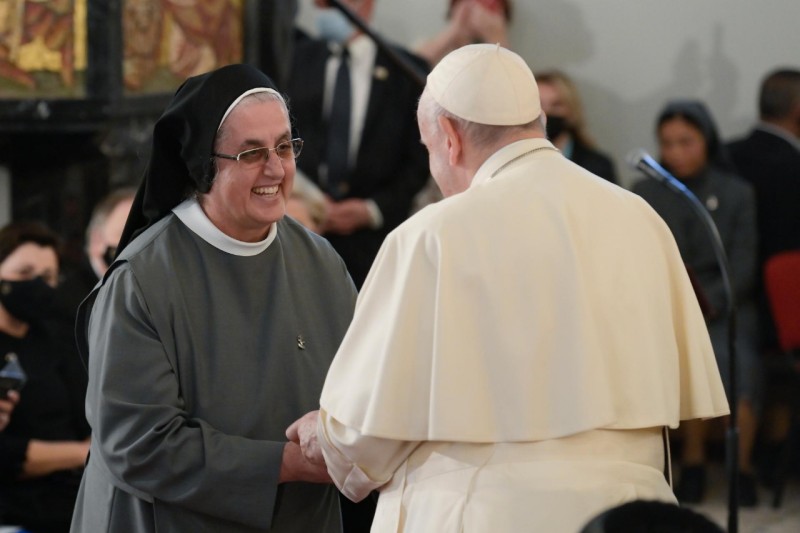
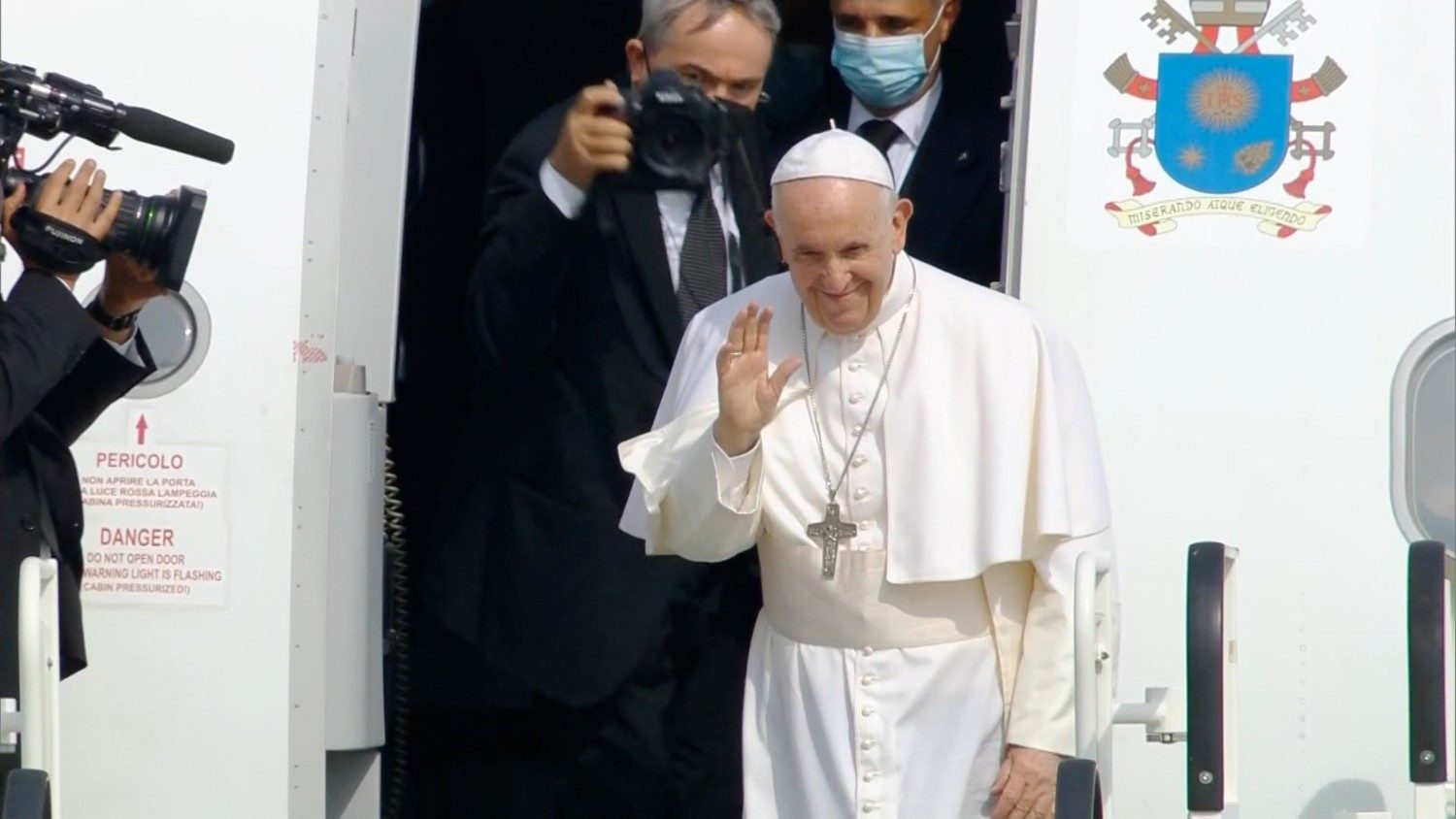
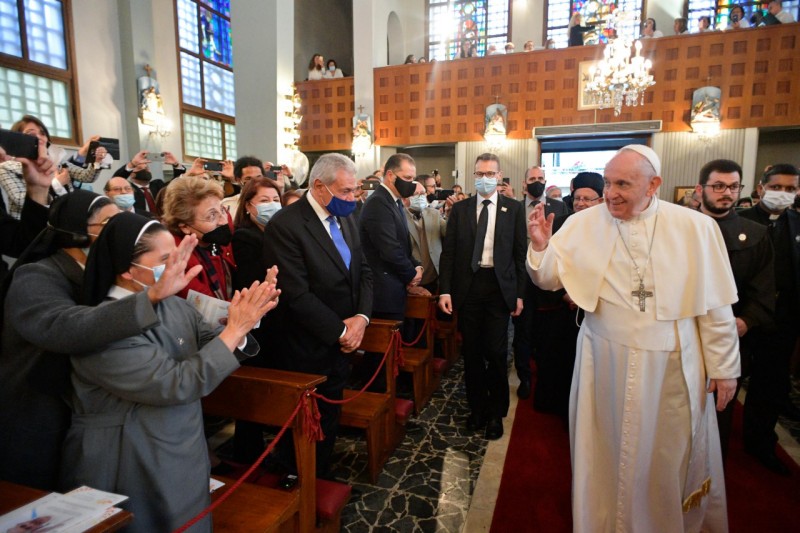
With great joy we share the testimony of our sister, Provincial Superior Sister Antonia Piripitsi, in the meeting of Pope Francis with priests and religious, in the Maronite Cathedral "Our Lady of Grace" in Nicosia on 02/12/2021, during his pastoral visit to Cyprus.
Holy Father,
We warmly welcome you to this island of Saints Barnabas and Paul, and many other saints who have contributed to the evangelization of the people of Cyprus.
This evangelization was also been carried out through many religious men and women who preceded us and gave priority to the education of poor children. This mission continues to this day in Catholic schools, which are an effective means of bearing witness to God’s love and inculcating human, Christian and religious values.
Your Holiness, the Catholic schools of the island currently in existing and in full activity are only three: The Terra Santa College in Nicosia (founded in 1646) belonging to the Franciscan Friars Minor, the Santa Maria School in Limassol, which in 2023 will celebrate its centenary, belonging to the Franciscan Missionary Sisters of the Sacred Heart and the elementary school of San Marone in Anthoupoli, frequented mainly by Maronite pupils. Both the Holy Land College and the Santa Maria School are open to boys and girls of all ethnicities, mentalities, cultures and religions. A truly ecumenical meeting place, without any discrimination, where bridges are built, where students learn to respect each other in its diversity, to love, to help each other, to dialogue, to collaborate together to build a better future, a future where everyone can live as brothers and sisters, without distinction of race, culture, religion or language.
In the recent past there were still three other schools, which unfortunately we were forced to abandon after the invasion of Turkish forces in 1974; some of our older sisters tell with regret how they had to flee without delay, to save their own skin. They thought they’d only have to stay one night and come back the next day, but that night’s been 47 years.
The year 1974 marked a dramatic page in the centuries-old peaceful coexistence of the Christian Greek Cypriot and Muslim Turkish Cypriot population. The division of Cyprus has radically changed not only the political and social order of the island, but also our mission in the occupied area in the north. Despite various difficulties and dangers, the sisters, assisted by Maronite priests, have never ceased to be present, poor among poor people, to support them spiritually and morally, and ensure that the bells of some churches continue to ring.
Our sisters originally from Kormakiti, Asomatos, Ayia Marina and Karpasha are advancing over the years, while it is noted that Catholic families are missing because, after the division of the island, they are scattered everywhere; moreover, As in many European countries, in Cyprus too, the demographic crisis and the secularization of daily life make our young people scarcely available to the life of service in the Church. It is an important challenge, which we face with prayer and witness, so that all the beauty of following may appear through us.
Your Holiness, our province of Saint Elizabeth of Hungary of the Franciscan Missionary Sisters of the Sacred Heart has begun the preparatory itinerary of our 150-year jubilee of presence in the Middle East that we will celebrate next year 2022. The theme we will address will be: "Enriched by the experiences of the past we live the present with confidence and courageously face the challenges of the future", is our Jubilee program of 150 years of presence and mission in the Middle East. We promise to live this time of grace as a space of renewal that we expect from God, the giver of every good, of every vocation and every fidelity.
During the Year of Saint Joseph which draws to a close, we wish to renew our personal and community enthusiasm at the service of the Gospel. And in his Holy Father presence, we entrust all our pastoral and educational activities to Saint Joseph and to Mary Most Holy. Thank you for being here among us!
"Times have changed and unfortunately the Church seems isolated and deserted..." Often we use this phrase now abused, in reality we do not realize how real and serious is what is happening and how deep is the gap that, after the pandemic, separates even more the church from the people and the civil community.
Pope Francis' courageous choices encourage us to begin some reflection together with the parish priests and other pastoral workers.
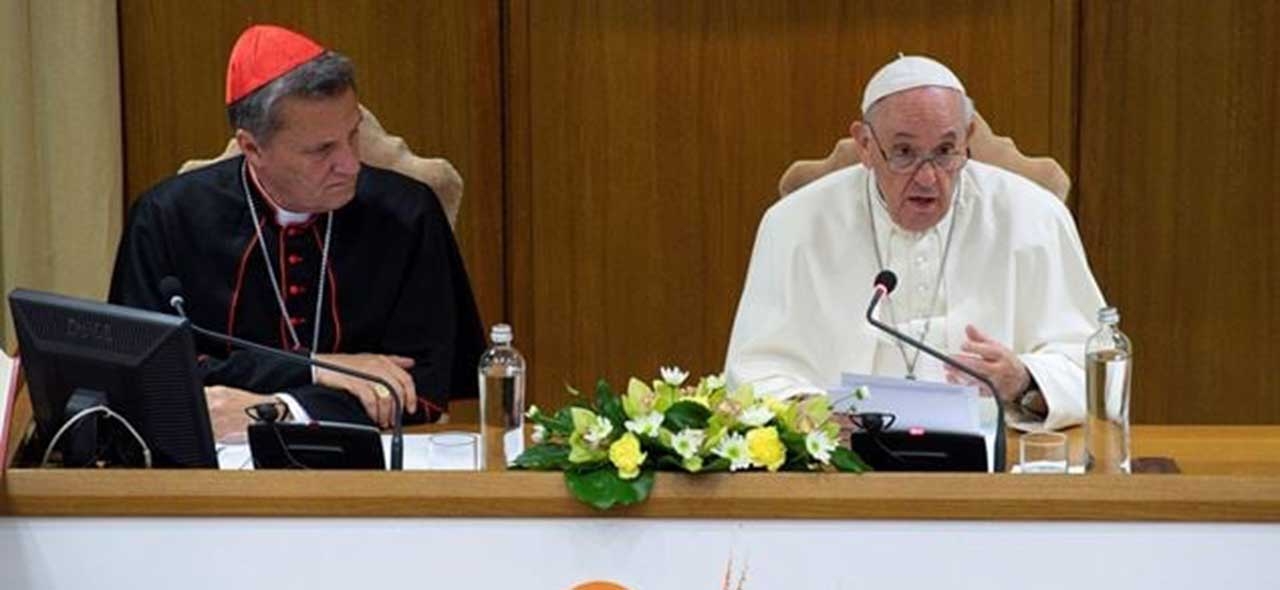
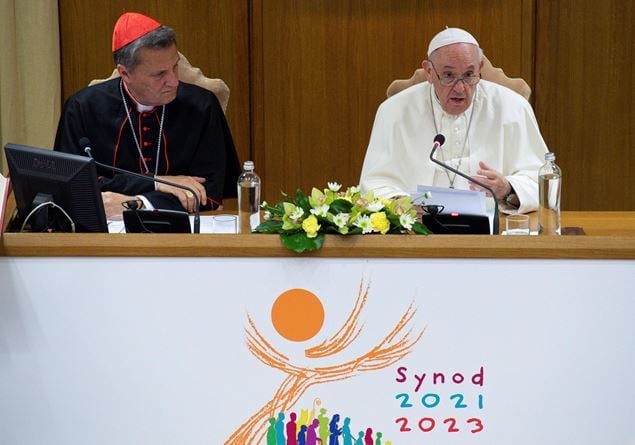
Let us start from the new experience of the SYNOD, which the Pope has proposed to us in a completely new form: no longer a consultation of the Bishops alone, but a study, a serious and wide-ranging reflection on the basis of all the people of God, convoked at the Synod.
If we think about it, the responsibility we share is exciting, entirely new.
The "SYNOD" structure was introduced by the enlightened Pope Paul VI into the episcopal college. The word itself: "Synod" is an ancient word linked to the Tradition of the Church, composed of the preposition "with", and the noun "way" indicates the journey made together by the People of God. Believers are companions in the journey, called to witness and proclaim the Word of God.
On the basis of all this, the Holy Father, looking at the primitive community of Jerusalem, invited all the people of God to come together in listening and making discernment in the Spirit.
The reform wanted by Pope Francis is divided into several phases: The first phase will involve the local Churches and will last until April 2022: it will be the «consultation of the people of God». The second phase is continental and will take the cues emerged from the local churches. The last phase is the meeting of the bishops with the Pope in October 2023 in the Vatican.
What steps does the Spirit invite us to take in order to grow as a Synodal Church?
To seek an answer, the Diocese of Rome has prepared papers for a path of synodal discernment based on the Beatitudes, at every ecclesial level, to be realized in each reality.
Our religious communities are also called, as part of the local church, to live the synodality. Our Superior General, with specific communication, urged us to take a special part as consecrated women and has invited us to reflect and to question ourselves on the theme of synodality, which is decisive for the Church, for her life and mission.
We therefore expect a synodal work in which "we are called first of all to pray to the Holy Spirit to open our hearts and minds, allowing Him to enlighten us and welcome his Creativity, as the Father wants".
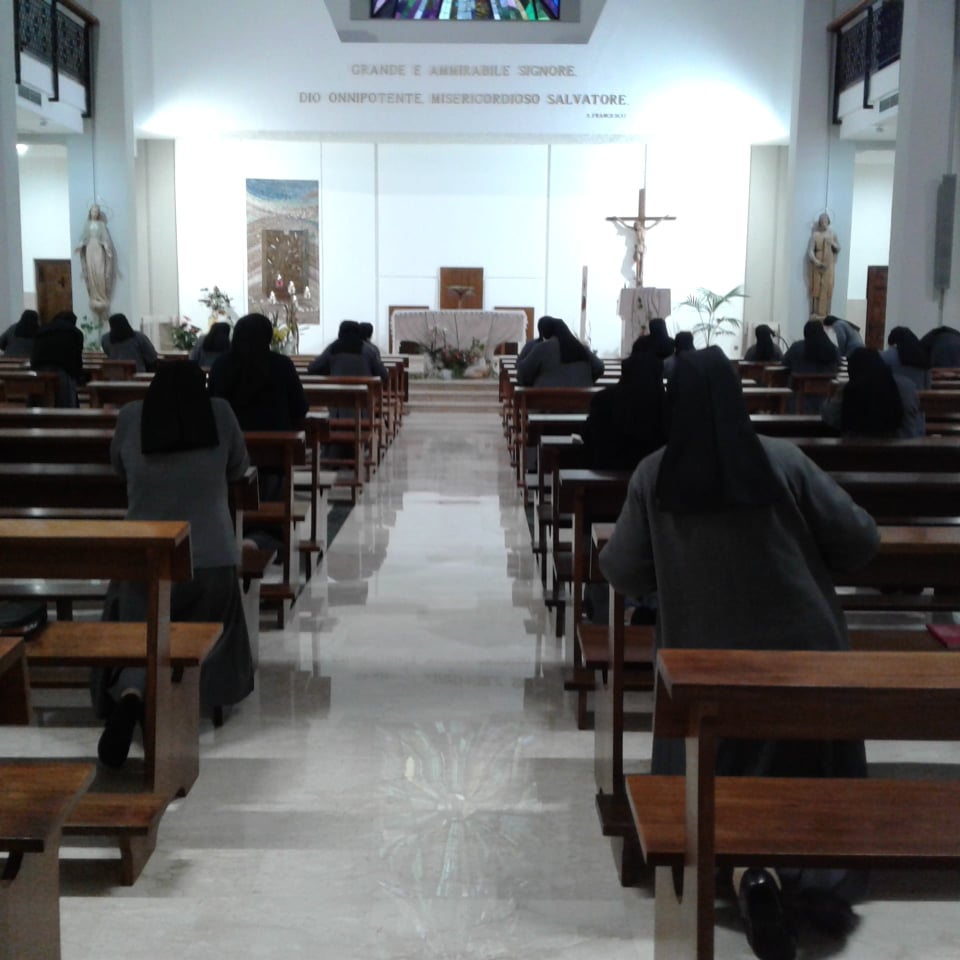
Our parish priest, Brother Mario Fucà gave us a tangible sign of something that wants to change, asking to meet the whole community. He came with his confrere, Brother Enzo, and he literally opened his state of mind in this special time of the Synod, which for him means engaging more in listening, in meetings. He reflected on the precious presence of consecrated life in his territory and urged attention to that privileged presence of ours which, if for reasons of age, can no longer be in activity, can nevertheless rediscover its true place in the Christian community which is: the prayerful presence, the listening and the witness of the absolute of God in our lives. He encouraged the sisters to be present especially in the circumstances of community prayer such as Eucharistic Adoration and Sunday Mass, to be with the people, to pray with them and to be witnesses.
The community was very attentive to these proposals of the parish priest and immediately responded positively. We are aware of entering into a movement that will have its labours, but we do so in the awareness that it is in the prophecy of consecrated life and in the manifold richness of its charisms, to walk together in the church, to rejoice, scrutinize, contemplate, proclaim, welcoming diversity and living in proximity.
Community of Centocelle-Rome
When Saint Francis discovered in Christ the meaning of his life, he felt the urgency of communicating with joy, the "treasure he had found", because love tends to expand.
We too, Franciscan Missionary Sisters of the Sacred Heart, heirs of the spirit of Saint Francis feel the need to better integrate our life with the laity, offering them our charismatic richness as an instance of growth in love and an invitation to participate in our evangelizing mission.
The experience of the Christian mystery is inexhaustible in the Church: from the integration of the different charisms the face of Christ is manifested to the world.
Religious receive from the laity their sense of the reality, their peculiar way of living the faith, their human richness, and their vision of life. The laity, for their part, expect from religious motivations to deepen the meaning of life, proposals of lasting and transcendent values and an authentic witness of spiritual life.
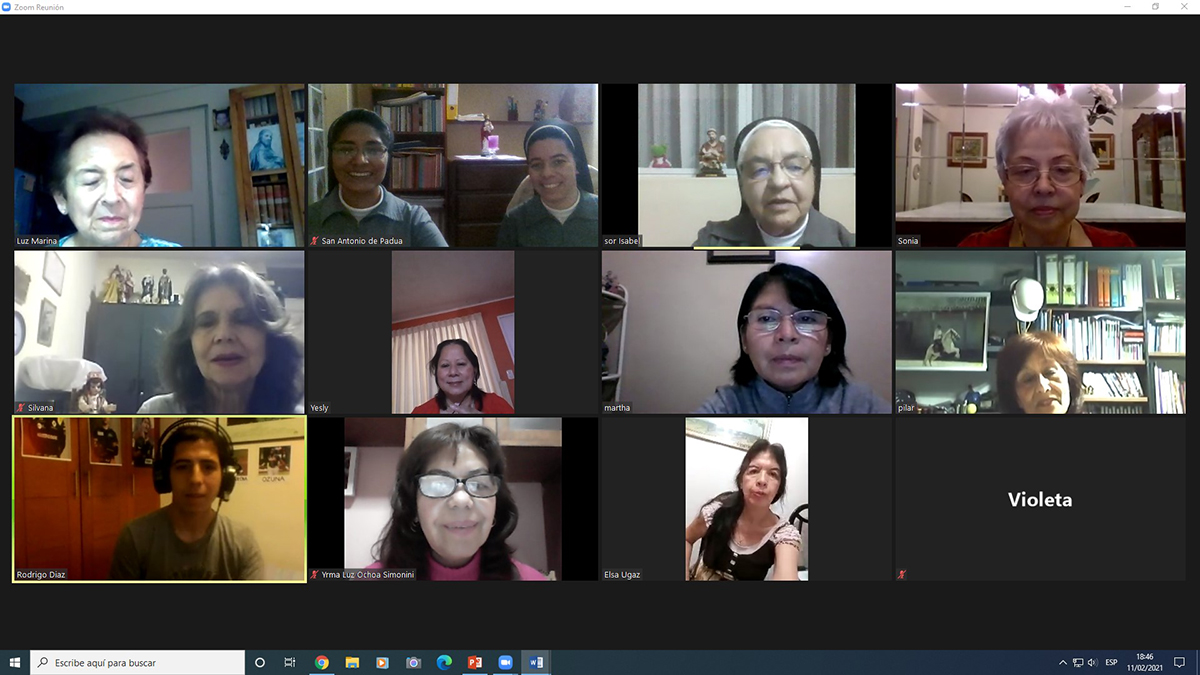
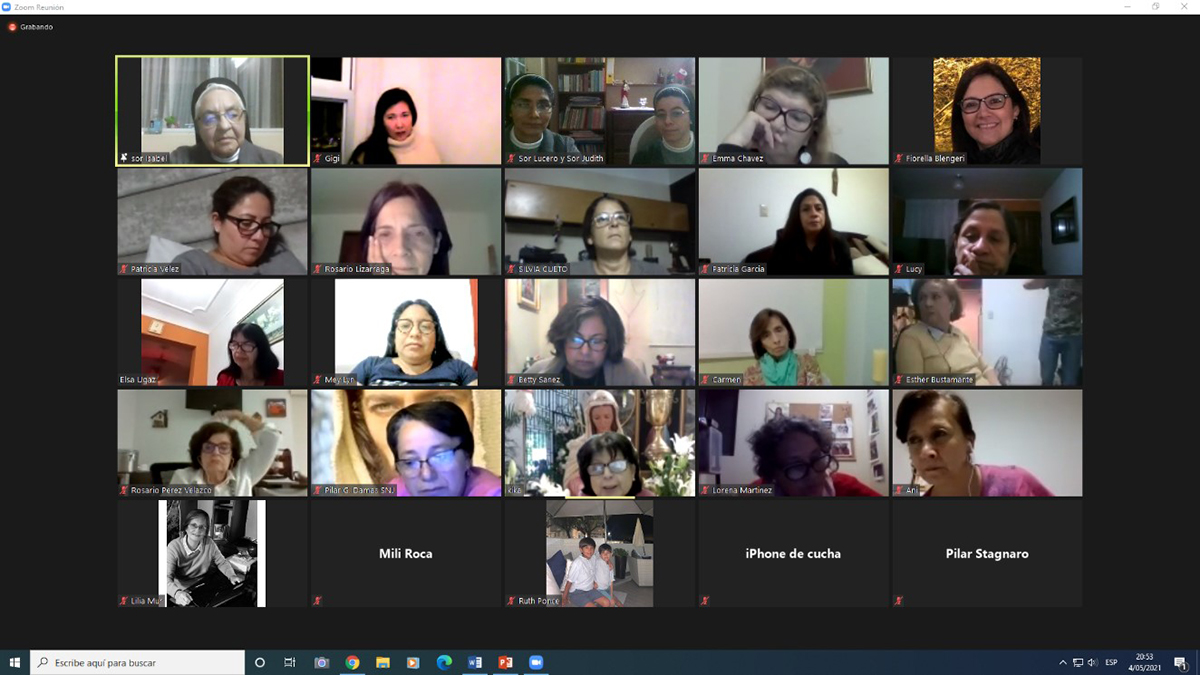
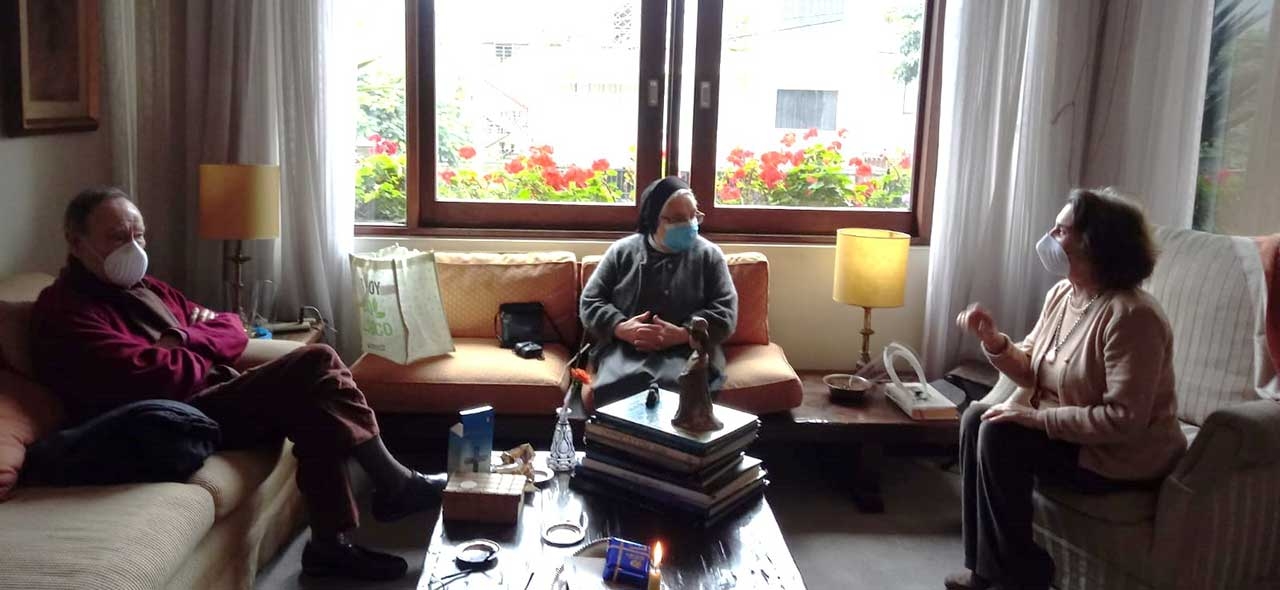
Briefly we present the life of a community of lay people associated with the Franciscan Missionary Sisters of the Sacred Heart, in the city of Lima, Peru, accompanied by the religious fraternity. During the time of health contingency, there has been an urgent need to develop visual material to deepen, by means of videoconference and other, the accompaniment and the space of formation of our lay associates; extending the invitation to other fraternities present in Latin American countries.
The visual audio material assumes the processing of texts and the choice of priests or other people for the presentation of the topics; in this way it makes good use of social networks, which, in the period of strict isolation, were the tool, as well as for prayer and for the emotional support and spiritual accompaniment of the members of the fraternity, who suffer losses, anguish, loneliness and in some cases depression due to fear and lack of interpersonal relationships.
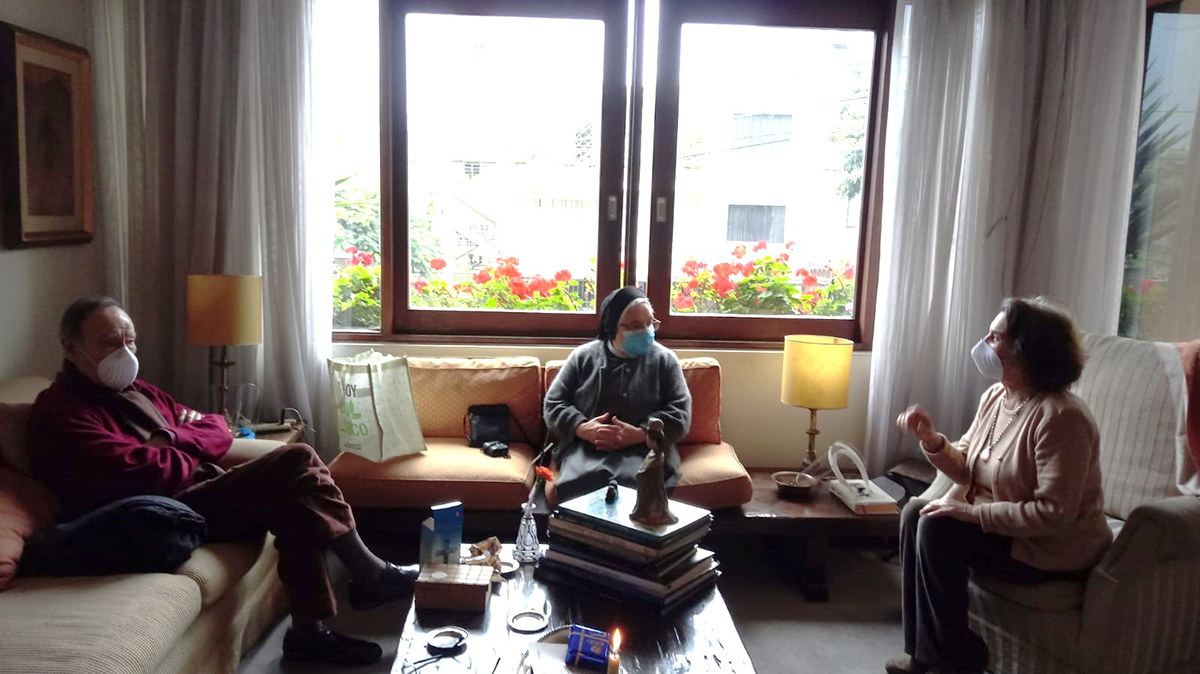
As a very positive sign, in this epidemiological scenario, people receive the vaccine against Covid 19, which allows the reduction of restrictions, and experience, for the soul and body, the benefit of the encounter in the presence, a true cause of joy both for the fraternity of the laity and for religious fraternity. These gatherings give rise to mixed feelings, on the one hand the joy of seeing one another, of listening to one another, but also the great nostalgia for the physical absence of the members of the lay fraternity, called to the Father’s house.
Like the lay faithful, "they are called by God to contribute, from within in a leaven way, to the sanctification of the world through the exercise of their tasks, guided by the evangelical spirit, and thus manifest Christ to others, mainly with the witness of their lives and with the radiance of their faith, hope and charity..." (Cf. Christifidelis Laici n L 59) The practice of this fraternal dimension enriches the path of formation and healing of the laity associated with the religious fraternity of Lima, under the protection of Our Lady of Perpetual Help, organised to support those most affected by the economic crisis caused by the pandemic.
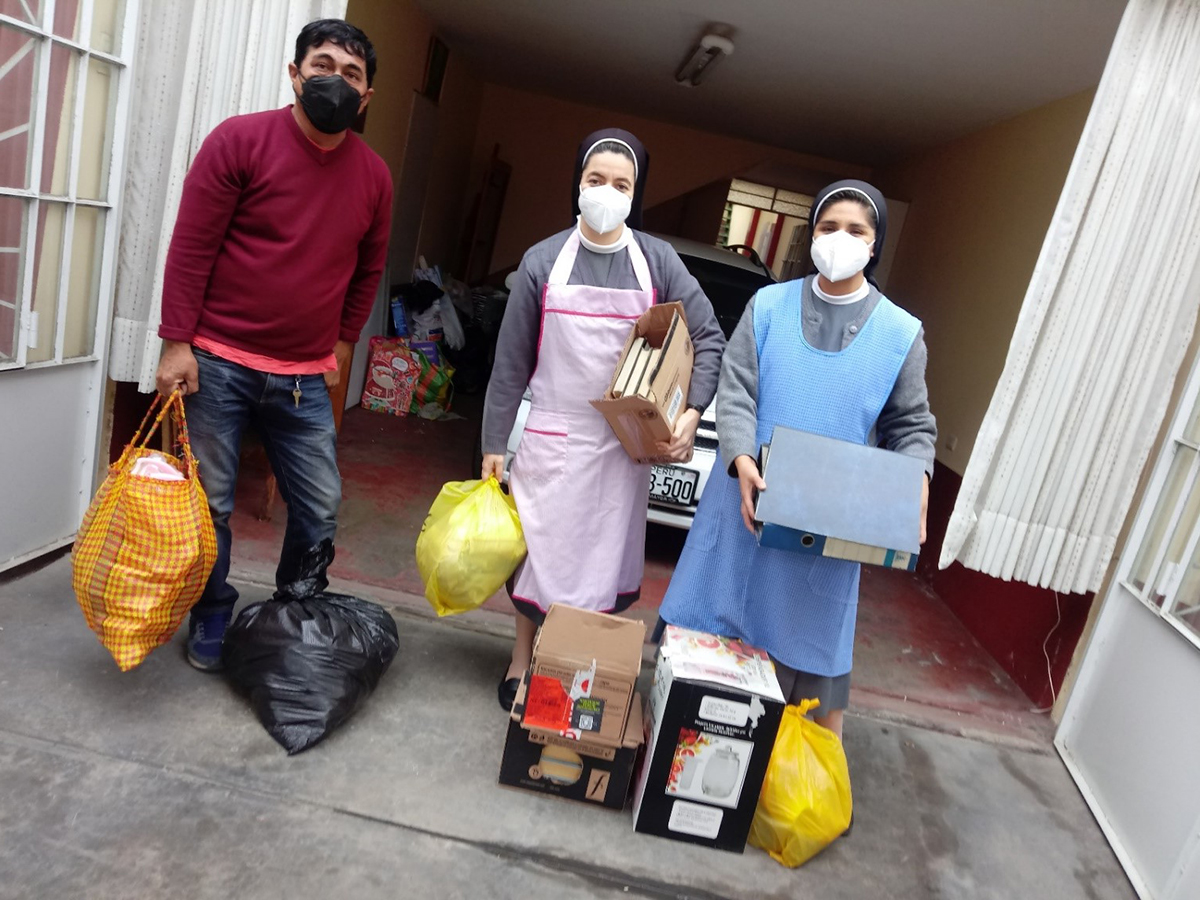
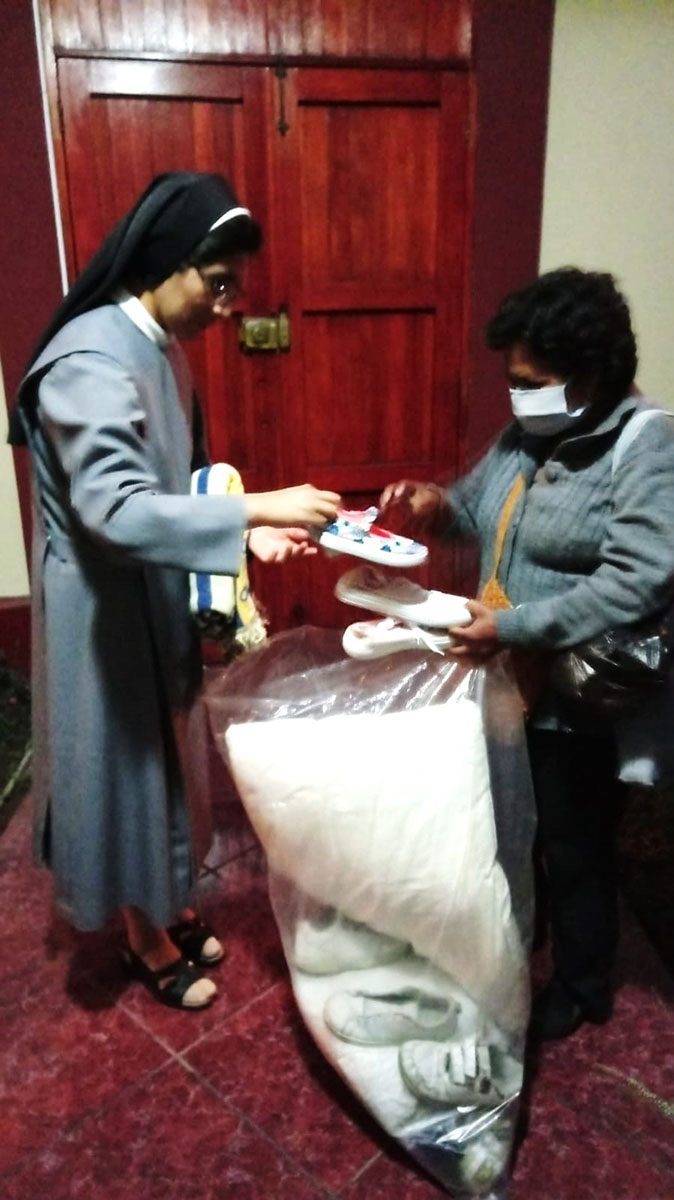
Following the words of Saint Albert Hurtado, "giving without ever getting tired", they share food, clothes, utensils and even money, delivered by bank transfer. In this way Divine Providence makes itself present and walks through the streets of Lima in the district of San Isidro, through the charity of so many people. The donations are shared with another religious congregation, whose apostolate is social pastoral care in the Villa Maria del Trionfo district, one of the most impoverished sectors of the capital, and also with many brothers and sisters without the necessary, who have manifested their need.
With the necessary precautions, the soul of the people is also nourished, with "The Bread of Life", the Eucharist that reaches out to the sick and the elderly in the sector, when they ask for it. In this way, the communion of the Church with the most vulnerable in the environment, who are the o, is strengthened.
Social networks have made it possible to bring the brothers and sisters closer together in the time of greater isolation, from last year until the present time. This is why gratitude flows to God, the Creator of all good, who moves hearts and inspires, through his Spirit, to do good. In this last period of the liturgical year in which the readings of the daily liturgy make present the second coming of the Lord and ask to be prepared, with a clean soul and hands full of good works, "For I was hungry and you gave me food... sick and you visited me... come, blessed by my Father... "(Cf. Mt. 25:35-44), every resource, well employed, gives glory also to God.
Nothing can paralyze the Spirit. Evangelization continues its journey, often uphill, overcoming its own discouragement and lack of use of social networks. In this context, painful, the wise words of our dear founder Venerable Father Gregory Fioravanti also shine: "Marvellous are the ways of the Lord and no one has the right to ask why in this way and not otherwise…" (F.1, p.16)
For the glory of God and the salvation of souls!